
Developments in Actuators Technology
Breakthroughs in Motion Technology Transforming Robotics, Electric Vehicles, Renewables, and Cutting-Edge Innovations

Published 5-june-2026

Actuators sit at the heart of every modern machine that moves. They turn energy into physical action, whether that means rotating a robotic joint, steering an electric vehicle, or adjusting the blades of a wind turbine to catch the right breeze. Over the past few years, these components have undergone a quiet but profound evolution. Demand for precision, efficiency, and adaptability has skyrocketed as robotics scales toward humanoids and quadrupeds, electric vehicles replace traditional drivetrains, renewable energy systems seek every possible gain in output, and entirely new fields like deep-sea operations and soft robotics open up. The push comes from converging pressures, labor shortages that favor automation, policy incentives for clean energy and electrification, advances in materials that let actuators respond to light or heat instead of just electricity, and geopolitical efforts to secure supply chains. The result is a wave of innovations that make actuators smarter, lighter, more powerful, and, crucially, more affordable at scale.
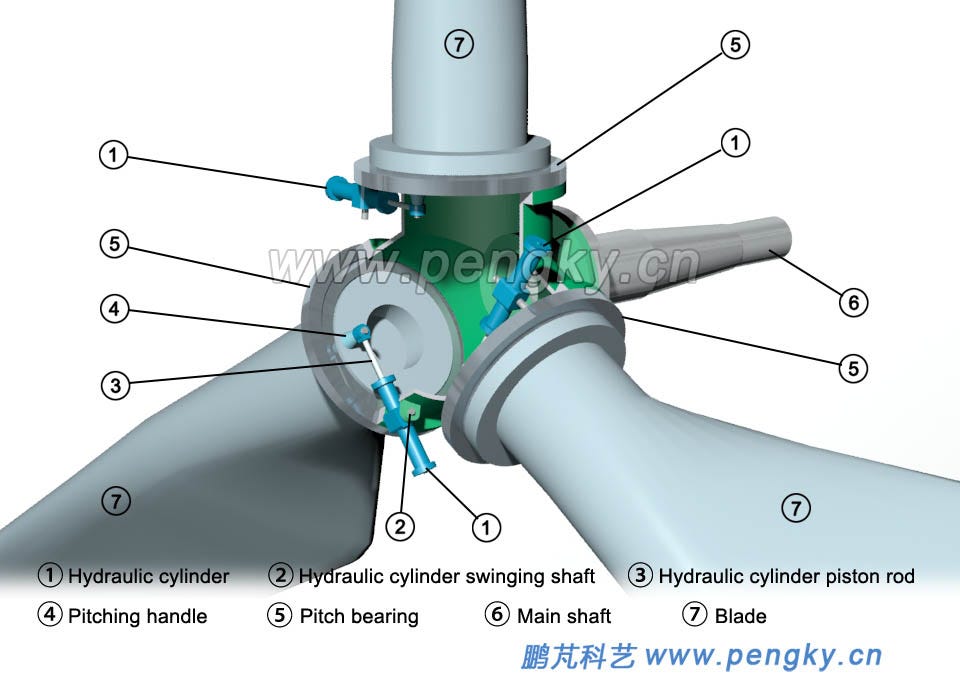
Independent Pitch System | Horizontal Axis Wind Turbine | PengKy

Current Developments in Actuator Technology
Actuator designs have moved well beyond basic hydraulic cylinders or simple electric motors. Today’s systems often blend multiple principles. Electric actuators lead the pack because they integrate easily with digital controls, consume less energy overall, and require far less maintenance than hydraulic or pneumatic alternatives. Smart versions add built-in sensors and edge computing so they can monitor their own health, adjust in real time, and feed data into larger AI systems. Soft actuators, built from flexible materials, allow compliant motion that feels more natural and safer around people. Stimulus-responsive types go further still, reacting directly to light, heat, or other environmental cues without traditional wiring or heavy batteries.
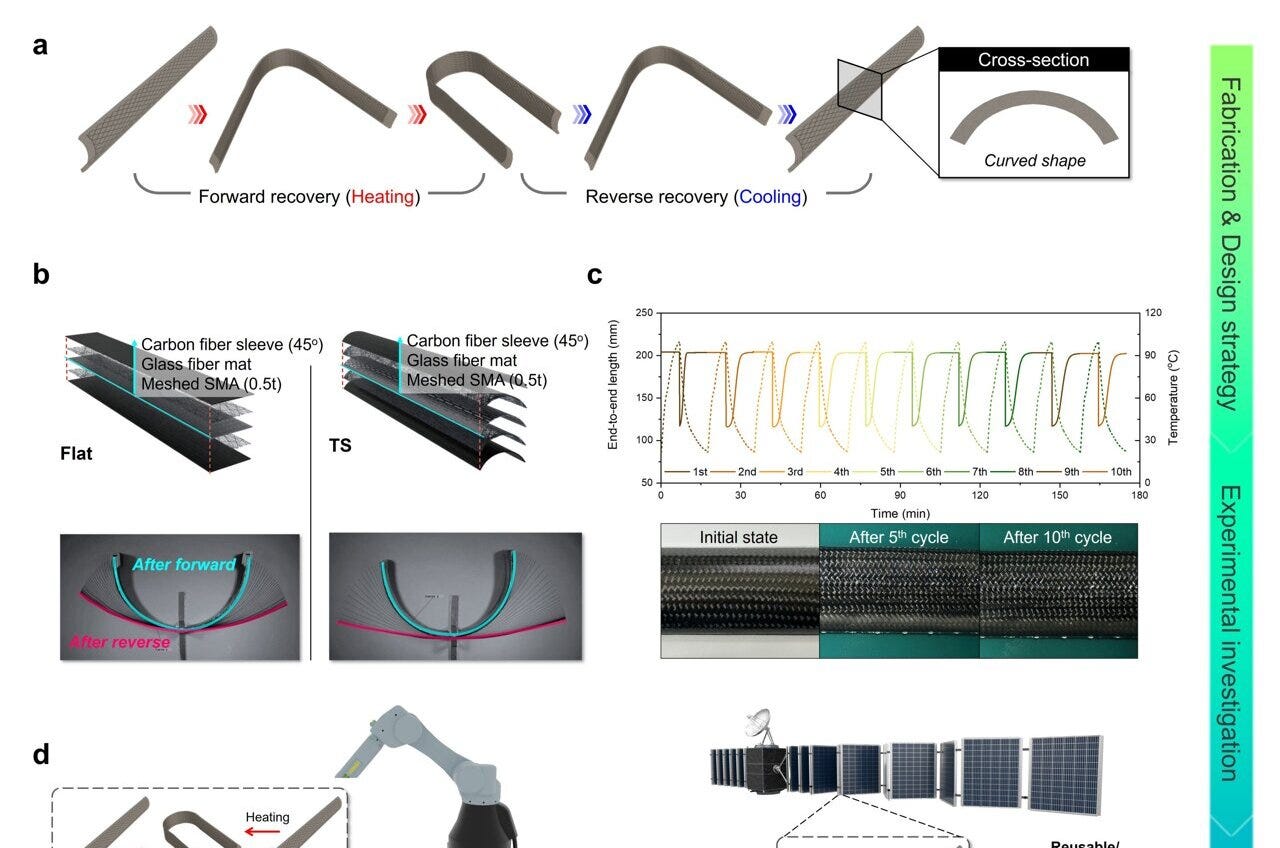
Several recent examples show how far the field has come. At KAIST in Korea, engineers created a hybrid actuator that combines shape memory alloys and polymers, reinforced with carbon fibers and shaped like a tape spring. When heated it bends sharply; when cooled it snaps back flat. The whole cycle happens in under a second, with nearly complete shape recovery and a deformation range eight times wider than earlier reversible systems. No complex motors are needed, which keeps the device lightweight and suitable for repetitive tasks in robotic grippers or for unfolding structures in space.
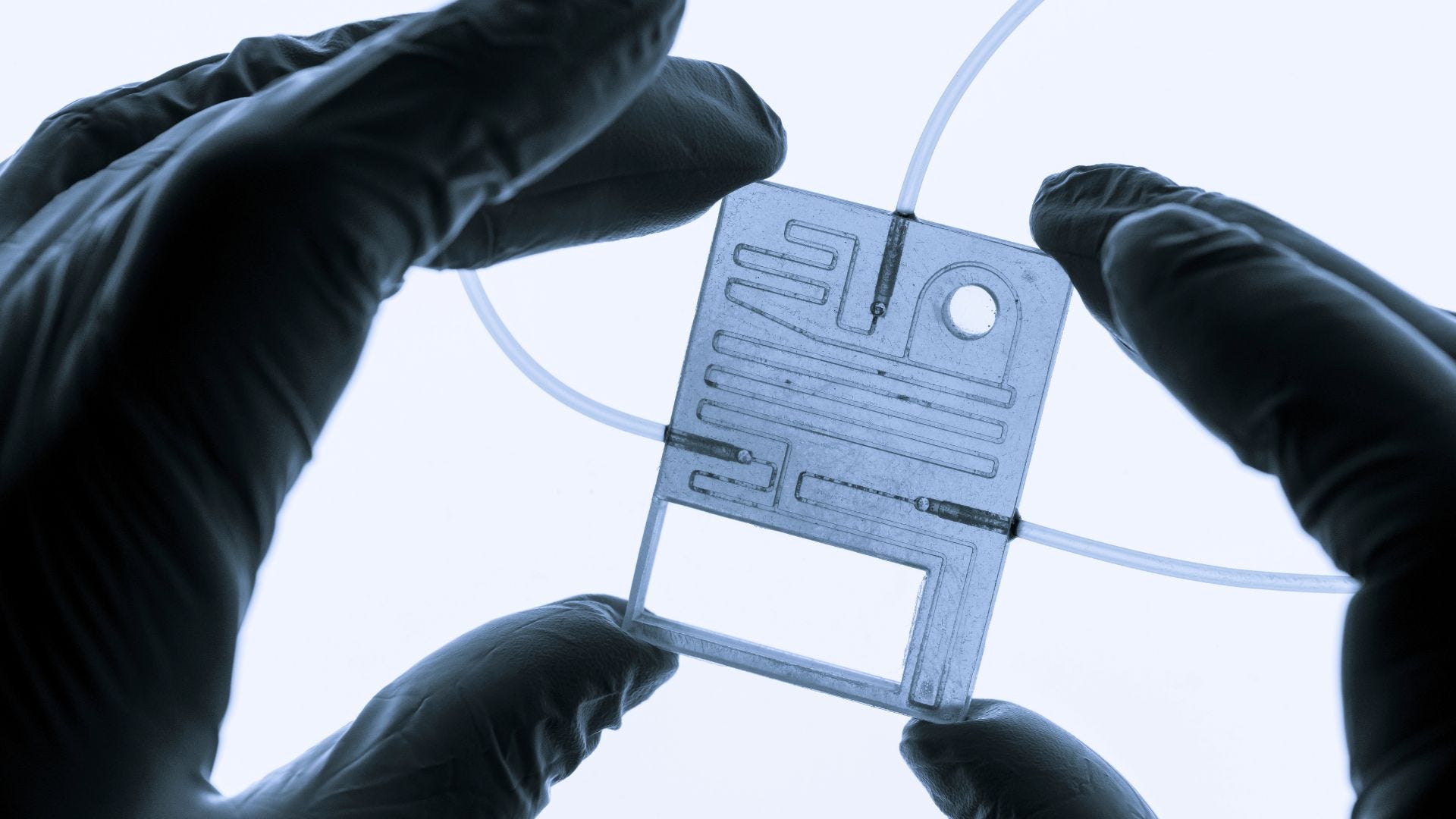
In China, researchers developed a photothermal actuator inspired by the vein structure of leaves. It converts light into rapid mechanical motion, balancing speed and load-carrying capacity so well that engineers built a photo-activated robotic dog able to stand, swim, jump, and crawl. The design demonstrates how light-driven systems can operate wirelessly and adapt to different environments without conventional power delivery.
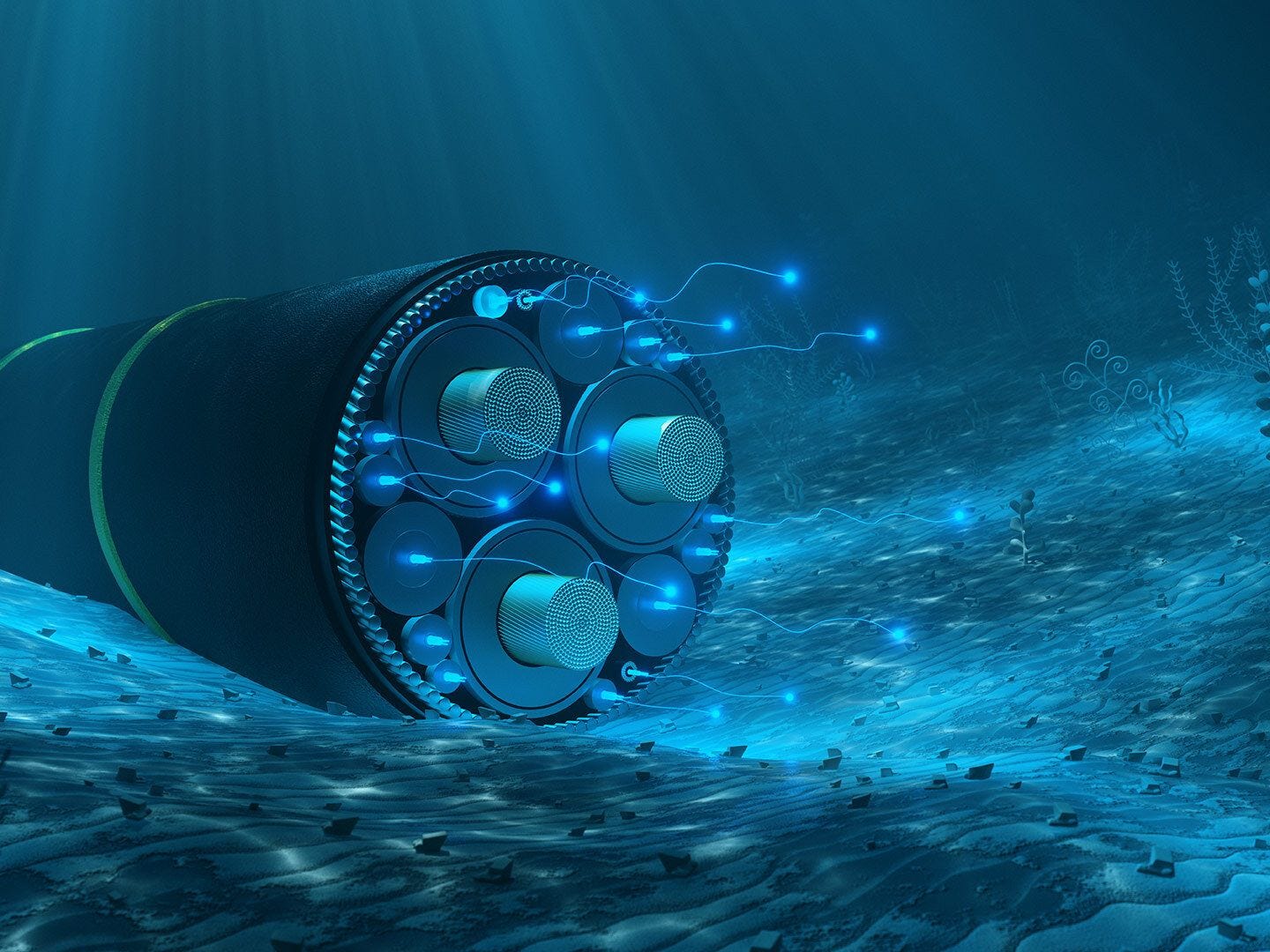
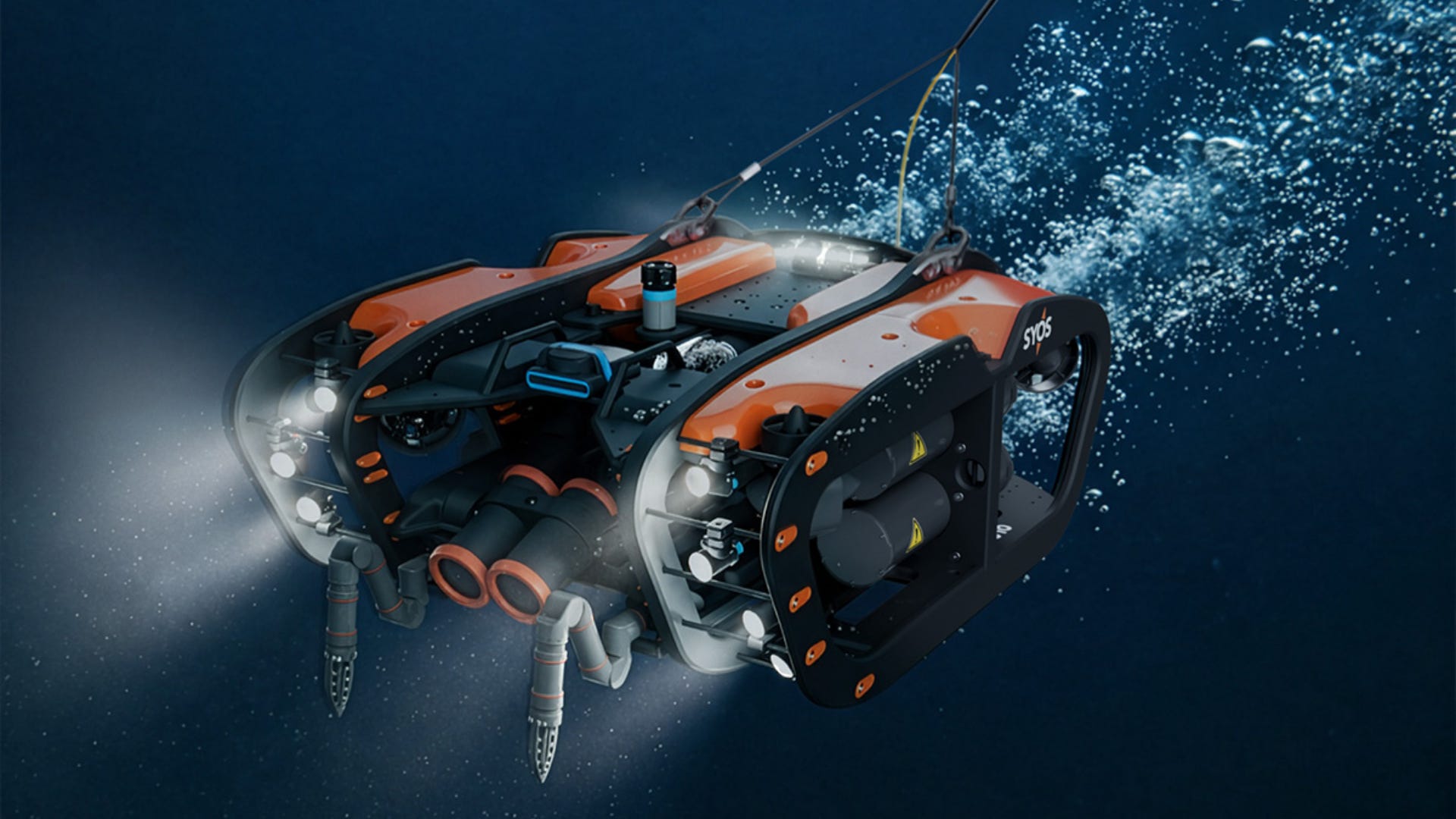
Underwater, Chinese teams tested an electro-hydrostatic actuator at 3,500 meters depth. Mounted on a research vessel, the compact unit successfully cut subsea cables and pipelines under extreme pressure. It extends the reach of remotely operated vehicles and opens new possibilities for ocean infrastructure work, maintenance, and exploration far beyond earlier 2,000-meter limits.
On the manufacturing side, the U.S. startup Westmag raised $11 million from Andreessen Horowitz and other top investors to build robot actuators and drone motors in South San Francisco. The company is ramping production to meet committed orders, directly tackling the long-standing reliance on imported components.

These examples point to broader tendencies: higher power density, reversible and stimulus-responsive operation, and designs that prioritize integration with sensors and AI.
Main Actors, Tendencies, and Global Supply Landscape
No single country or company controls the entire actuator ecosystem. Japan dominates precision mechanical elements such as harmonic reducers and high-accuracy bearings that give robotic joints their smooth, high-torque performance. Germany and Switzerland supply sophisticated motion-control electronics and premium motors used in high-end automation. China leads in volume production of motors, reducers, and rare-earth magnets that power most actuators today; it also drives many material innovations seen in photothermal and deep-sea systems. The United States is strengthening its position through startups like Westmag that focus on domestic scaling and through established players such as Moog, Curtiss-Wright, and Rockwell Automation that emphasize smart, integrated solutions.
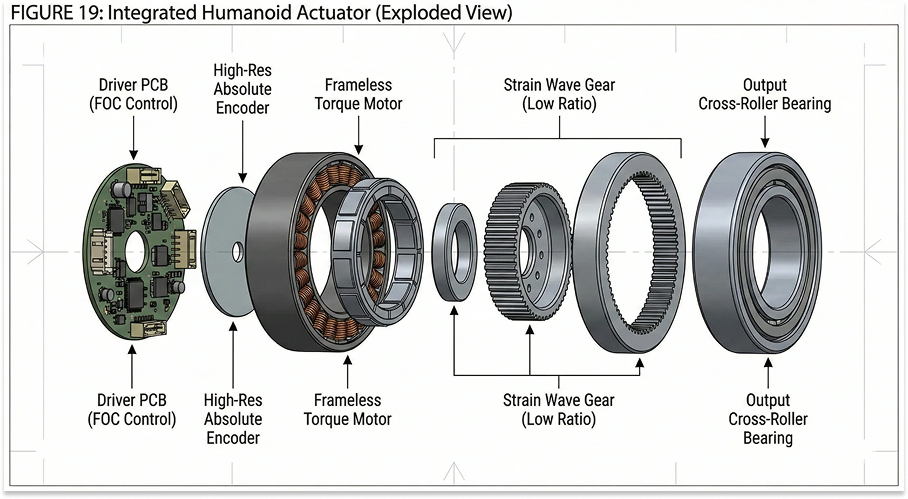
Major corporations like ABB, Festo, Bosch Rexroth, SMC, and Harmonic Drive provide the industrial backbone. Research labs, including KAIST, continue to push material boundaries. The supply chain for a typical humanoid joint actuator reveals the layered dependencies: encoders often come from UK or German specialists, frameless motors from Swiss or American firms, magnets heavily from China with some Japanese and German contribution, and gears and bearings overwhelmingly from Japan. This fragmentation creates both opportunities for specialization and risks when any link is disrupted.
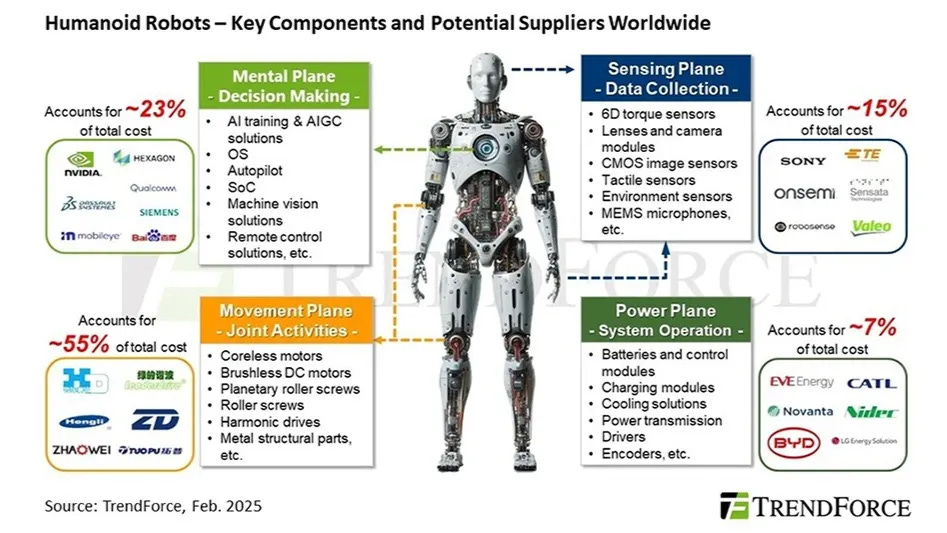
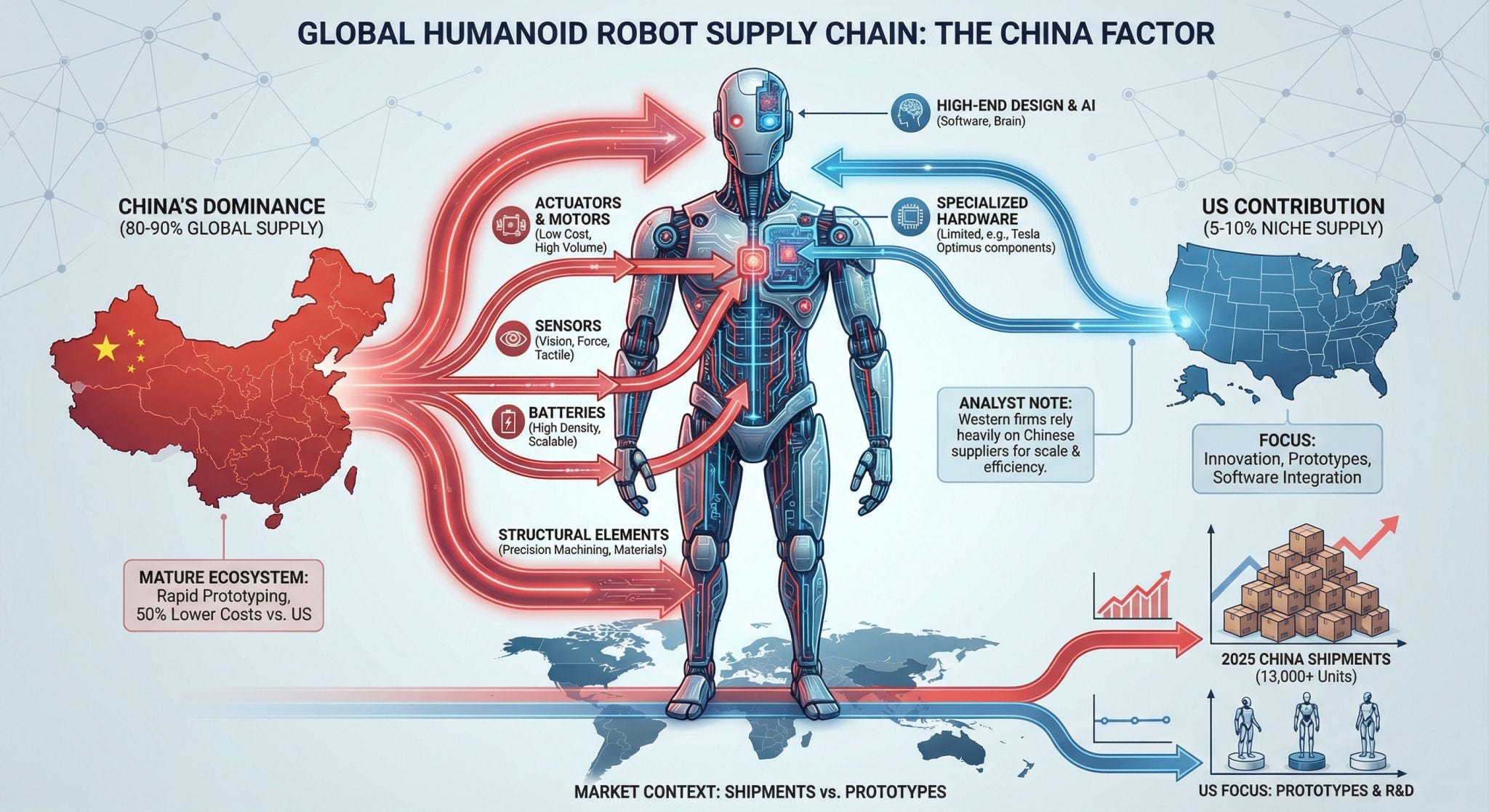
The overarching tendency is electrification combined with intelligence. Manufacturers increasingly favor electric actuators over hydraulics for their cleanliness and predictability. Integration of IoT allows predictive maintenance, while modular designs speed up customization across sectors.
Applications and Influence in Key Sectors
In robotics, better actuators translate directly into more capable machines. Humanoids gain the dexterity needed for complex assembly or household tasks, while quadrupeds achieve agile locomotion in rough terrain. The Korean hybrid and Chinese photothermal examples show how new designs expand what robots can do without adding weight or complexity.
Electric vehicles benefit on multiple fronts. Traction motors are the most obvious actuators, but auxiliary systems for steering, braking, and suspension use precise electric actuators that improve handling, safety, and energy use. Designs like RISE Robotics’ cylinders cut battery drain compared with traditional hydraulics, letting engineers specify smaller packs or extend range. In manufacturing lines, actuators speed battery assembly and quality control.
Renewable energy installations rely on actuators for optimization. Linear electric actuators tilt solar panels to track the sun, capturing up to 40 percent more energy than fixed arrays. In wind turbines, pitch actuators adjust blade angles in real time to maximize output while protecting against gusts; electric versions reduce maintenance in offshore settings where hydraulics can leak or corrode. These improvements lower the levelized cost of energy and make renewables more competitive.
Emerging fields gain even more dramatic advantages. Deep-sea actuators enable cutting and manipulation at depths once considered unreachable. Space missions use lightweight reversible actuators for deployable solar arrays or antennas. Soft and bio-inspired actuators open medical applications such as wearable exoskeletons and minimally invasive surgical tools.
Challenges and Limitations
Progress is not without friction. Rare-earth magnets remain a critical bottleneck; China processes the vast majority, exposing the industry to price swings and export restrictions. Precision components such as reducers and bearings are expensive and often sourced from a handful of suppliers. Scaling to the millions of units needed for widespread humanoid deployment drives costs that still exceed many business cases. Durability in extreme conditions, thermal management in compact packages, and seamless control when dozens of actuators work together in one system continue to demand engineering attention. Cybersecurity risks rise as actuators become networked and intelligent.
Drivers of Change Across Actors and Conditions
Material science breakthroughs, from hybrid composites to liquid-metal photothermal films, lower barriers to new performance levels. Market demand from robotics companies, EV makers, and renewable developers creates strong economic incentives. Policy frameworks that support electrification and domestic manufacturing, together with investor interest in supply-chain resilience, encourage companies like Westmag to build factories at home. Cross-sector learning accelerates everything: robotics actuators inform EV designs, while deep-sea testing informs offshore wind maintenance. Geopolitical realities push nations to diversify suppliers, turning what once looked like a vulnerability into a catalyst for innovation and new industrial capacity.
Network Analysis of the Effects of Better and Cheaper Actuators
Better and cheaper actuators do not improve one sector in isolation. They create a web of reinforcing effects that ripple outward. The following network diagram captures the main connections and feedback loops.
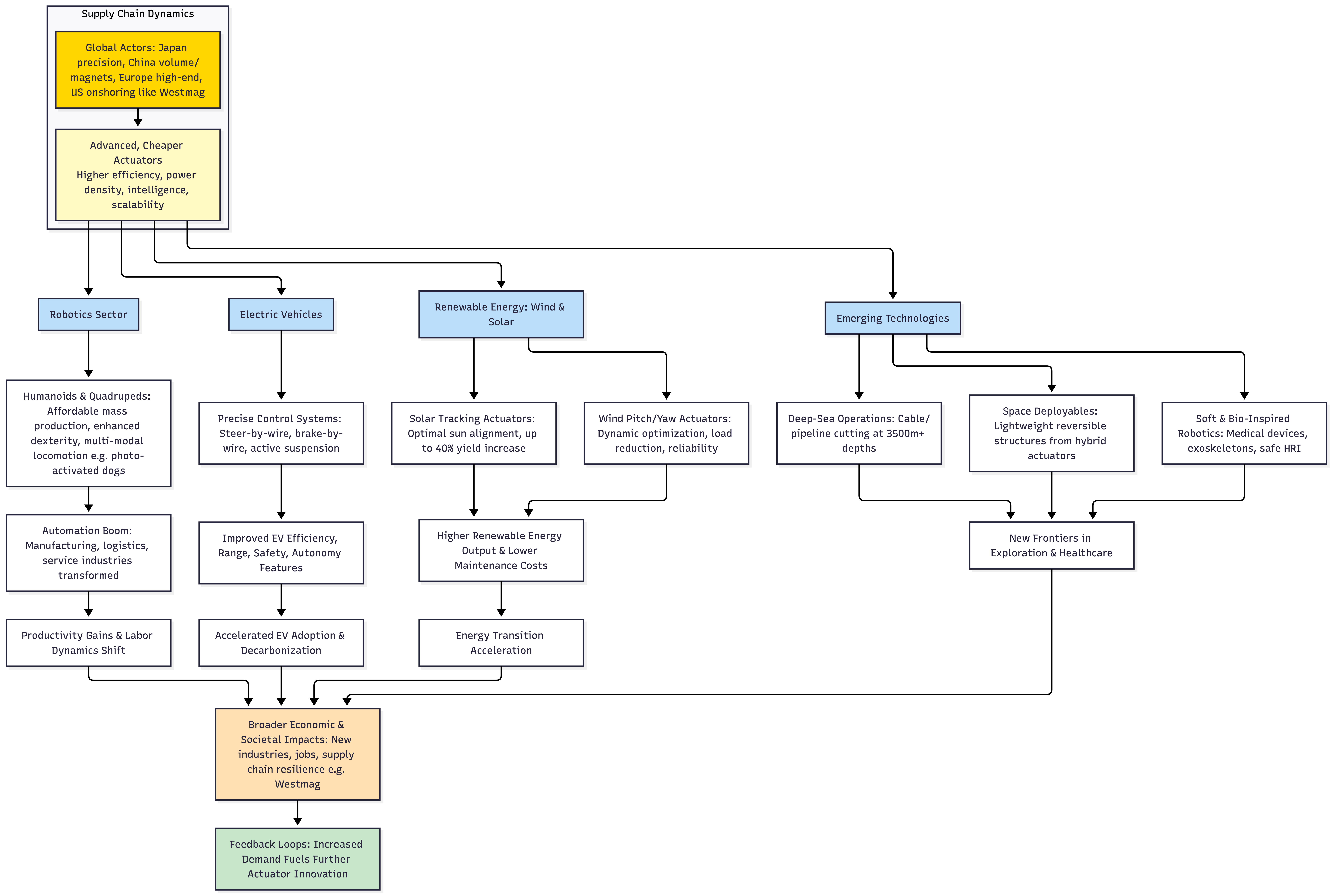
The diagram shows how gains in one area strengthen others. For instance, cheaper actuators make humanoid robots viable for factories, which in turn increases demand for precision components and drives further cost reductions. EV improvements reduce transport emissions while freeing capital for renewable projects. Deep-sea and space applications expand resource access and scientific knowledge, feeding back into material science that benefits every sector.
Outlook
The coming decade looks promising. Market forecasts point to sustained double-digit growth in robotics actuators and steady expansion in electric actuators overall. Continued material and manufacturing advances should bring costs down while performance climbs. Onshoring efforts in the United States and Europe will diversify supply and reduce single-point risks. Integration with AI will produce actuators that learn and adapt on the fly. By the mid-2030s, expect widespread deployment of affordable humanoids, EVs with extended range and refined ride quality, renewable installations that extract maximum energy with minimal upkeep, and routine operations in previously inaccessible environments. The cumulative effect will be higher productivity, cleaner energy, and new capabilities that reshape daily life and global industry.
Conclusion
Actuators have always been the muscles behind machines, but recent breakthroughs are turning them into intelligent, adaptable systems that unlock possibilities once confined to science fiction. Whether powering a light-responsive robotic dog, enabling precise solar tracking that squeezes every watt from the sun, or allowing safe deep-sea work at crushing depths, these technologies are quietly supporting larger transformations in robotics, mobility, energy, and exploration. As countries and companies navigate supply challenges and seize new material opportunities, the actuator awakening is set to deliver lasting gains in efficiency, resilience, and innovation across the board.
Sources
Westmag scaling announcement and X post by @boxcardavid (June 2, 2026):


Humanoid actuator supply chain analysis by @michellelsun (June 1, 2026):


Interesting Engineering – Photo-activated robotic dog actuator (leaf-vein inspired photothermal actuator): https://interestingengineering.com/innovation/actuator-powers-photo-activated-robotic-dog-speed
Interesting Engineering – China deep-sea electro-hydrostatic actuator test at 3,500m: https://interestingengineering.com/innovation/china-deep-sea-actuator-3500m-test
Interesting Engineering – KAIST Korea rapid reversible smart actuator (hybrid SMA-SMP): https://interestingengineering.com/ai-robotics/korea-rapid-reversible-smart-actuator-motors
a16z investment announcement in Westmag: https://a16z.com/announcement/investing-in-westmag/
Westmag promotional image and motor component (X media): https://pbs.twimg.com/media/HJ0QdSBaQAAgi--.jpg
Humanoid actuator supply chain infographic (X media from @michellelsun): https://pbs.twimg.com/media/HJtSODMbIAA7hq8.jpg
KAIST hybrid actuator development diagrams (TechXplore / IE): https://techxplore.com/news/2026-03-robotic-motors-shifting-actuator.html
Deep-sea electro-hydrostatic actuator and ROV visuals (Tom’s Hardware): https://www.tomshardware.com/tech-industry/china-tests-deep-sea-electro-hydrostatic-actuator-that-can-cut-undersea-cables-at-a-depth-of-3-500-meters-state-hails-successful-trial-and-hints-at-deployment-readiness


______
About the Author
Jose Luis Chavez Calva is an independent international consultant and economist specialising in energy markets, network theory and innovation. He holds a PhD in Economics from the University of Essex and previously served in Mexico’s Secretariat of Finance and Public Credit (SHCP) and as General Coordinator and then Head of the Electricity Market at the Energy Regulatory Commission (CRE). He has been an independent advisor for the last 10 years and has more than 18 years of professional experience. He is a recipient of the 2011 National Public Finance Award of the Mexican Congress.
All original ideas are not his, but all wrong facts are entirely his own. This article is not investment advise.
Full archive of articles: joseluischavezcalva.substack.com