
Beaming Power from Orbit
Commercial Efforts in Space-Based Solar Electricity Generation for Earth, Space Stations, and Future Lunar Bases

Published 27-may-2026

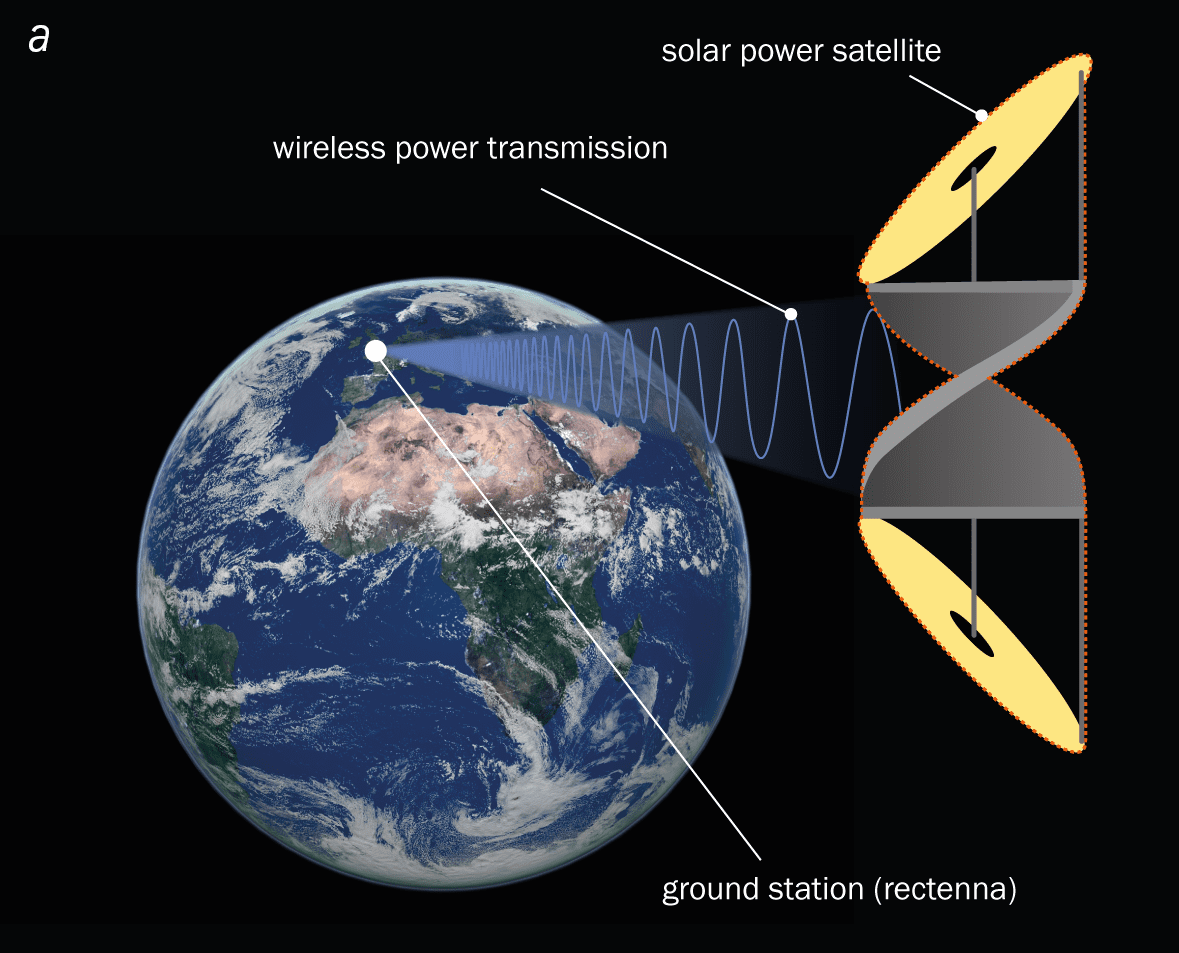
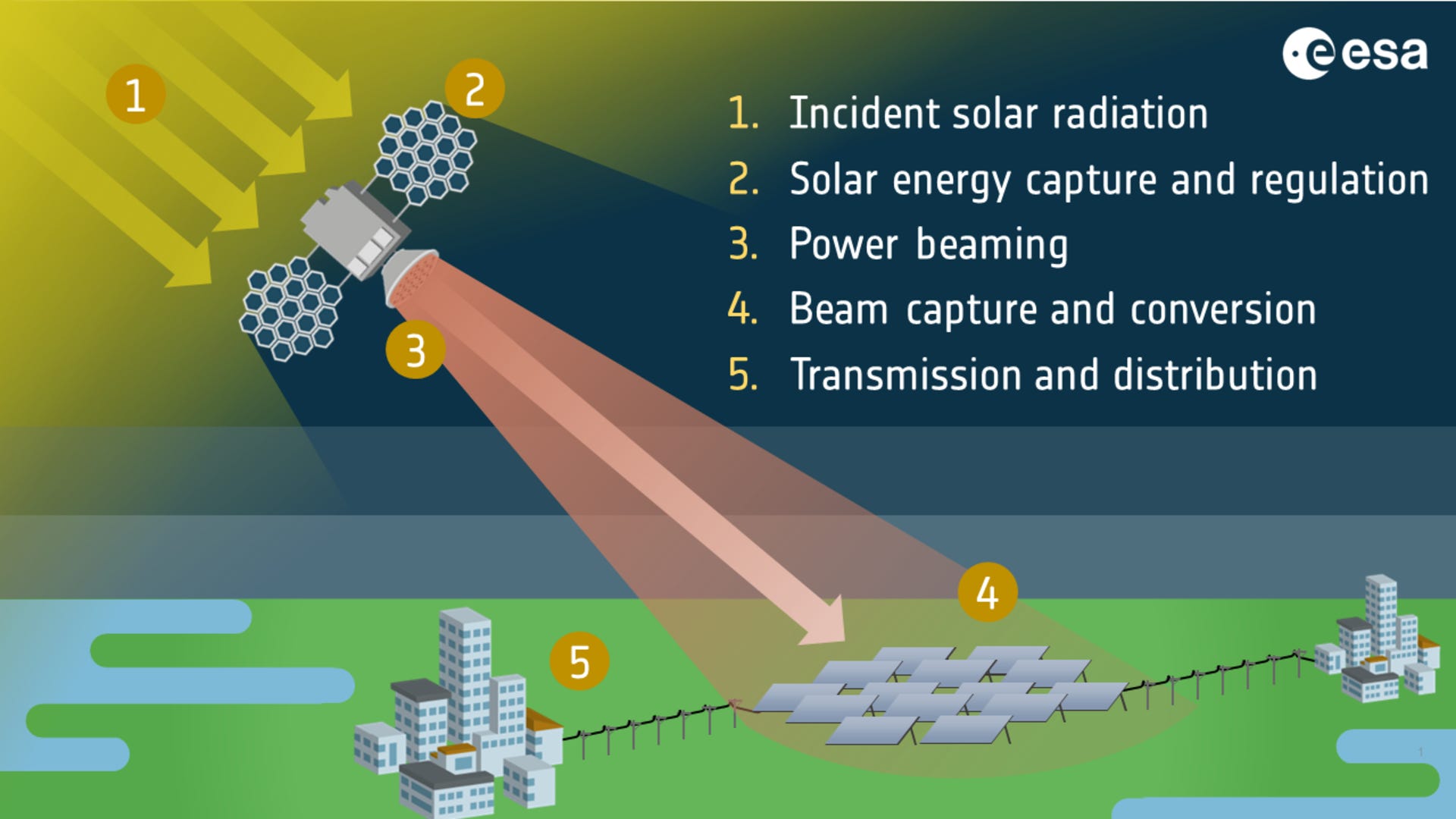
Space-based solar power systems collect uninterrupted sunlight in orbit or on the lunar surface and convert it into usable electricity, either for direct use in space or beamed wirelessly to Earth. Commercial momentum has built rapidly in recent years. Reusable launch vehicles have slashed costs dramatically, lightweight photovoltaic materials have improved efficiency and durability, and wireless transmission technologies have advanced through successful demonstrations. Global energy demand continues to surge from data centers, electrification, and remote operations, while climate imperatives push for firm, dispatchable clean power that terrestrial renewables alone cannot always deliver. These converging forces have shifted space solar from long-term speculation to near-term commercial viability, with startups and agencies targeting initial deployments by the late 2020s and scaling in the 2030s.
SpaceX plays a pivotal enabling role. Its Starship vehicle offers unprecedented payload capacity exceeding 100 tons to low-Earth orbit combined with full reusability, driving projected launch costs down to levels that make heavy, modular solar arrays and assembly hardware economically practical. Many commercial players explicitly design around Starship availability for frequent launches of tile-based components or larger pre-assembled segments. SpaceX’s proven track record with massive Starlink constellations also supplies operational expertise in manufacturing, deployment, and managing large orbital fleets, creating synergies for space solar developers who need similar scale and reliability.
Why Space Solar Power Is Gaining Momentum Now
Continuous sunlight availability in geostationary or specialized orbits eliminates the intermittency that limits ground-based solar. Systems can deliver power around the clock, unaffected by weather or day-night cycles. Launch costs have fallen by orders of magnitude thanks to vehicles like SpaceX Starship, making the mass-intensive arrays and transmitters economically plausible. Advances in modular designs and robotic in-space assembly reduce reliance on single massive launches. Meanwhile, terrestrial energy markets face constraints: data centers require reliable gigawatts, remote military or disaster sites need portable power without fuel logistics, and lunar exploration demands solutions for the two-week lunar night. Governments and private investors see strategic value in energy security and technological leadership. Market analyses project the space-based solar power sector growing from roughly 0.7 billion USD in 2025 to several billion by the mid-2030s, driven by these factors and early offtake agreements.
Development Trajectory
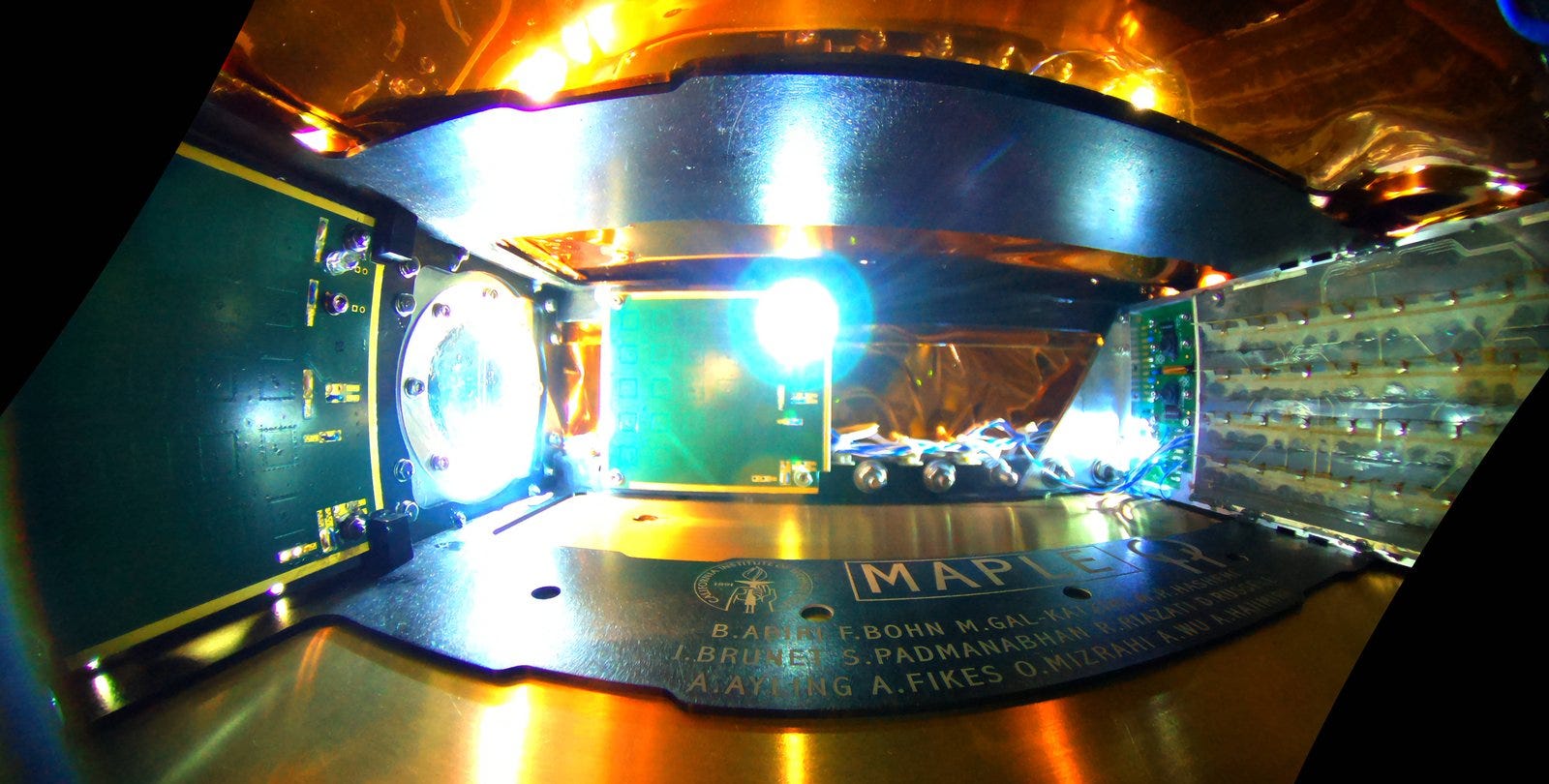
Early concepts date back decades, but practical progress accelerated after 2020. Caltech’s Space Solar Power Demonstrator (SSPD-1), launched in 2023, achieved the first wireless power transmission in space via its Microwave Array for Power-transfer Low-orbit Experiment (MAPLE). The system beamed detectable power both between spacecraft components and to a ground receiver in California, validating lightweight, flexible phased-array transmitters built on low-cost silicon chips.
Japan Aerospace Exploration Agency (JAXA) has conducted ground and short-range demonstrations of microwave beaming, while the European Space Agency’s SOLARIS initiative has funded feasibility studies and ground tests. China has outlined ambitious milestones, including a low-Earth-orbit 10-kilowatt test around 2028 and megawatt-scale systems by 2030. In the United Kingdom, government-backed projects have matured designs toward commercial readiness. Startups have compressed timelines further by focusing on modular architectures and niche applications rather than waiting for gigawatt-scale infrastructure. SpaceX Starship development has accelerated this trajectory by removing the launch-cost barrier that previously rendered many designs uneconomic.
Main Actors and Emerging Tendencies
A diverse ecosystem of actors is shaping the field. Established agencies provide validation and funding, while startups drive innovation in business models and hardware.
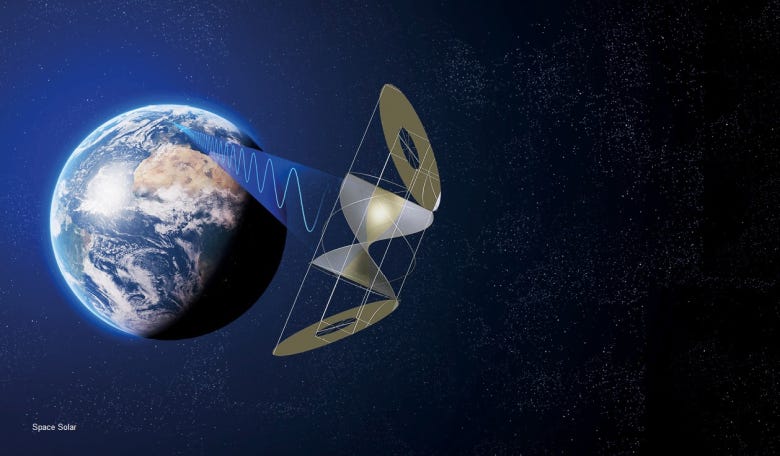
Space Solar (UK) leads with its CASSIOPeiA design, featuring a solid-state phased-array microwave system that uses lightweight reflectors for continuous sun-pointing without mechanical gimbals. The company demonstrated the world’s first 360-degree wireless power transmission and secured partnerships with National Grid Electricity Distribution and Iceland’s Reykjavik Energy for a 30-megawatt demonstrator targeted around 2030. UK Space Agency support and NATO involvement underscore dual-use potential.
Overview Energy pursues geosynchronous-orbit satellites beaming near-infrared lasers to existing terrestrial solar farms. This approach repurposes ground infrastructure for nighttime generation. The company announced a deal to supply up to one gigawatt to Meta data centers and plans an in-space demonstration in 2028 with commercial operations by 2030.
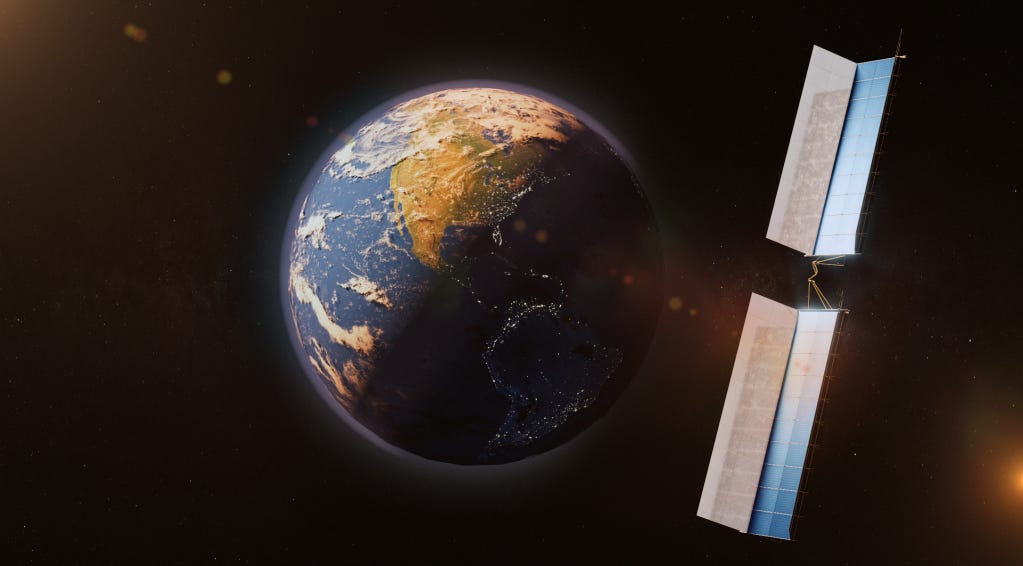
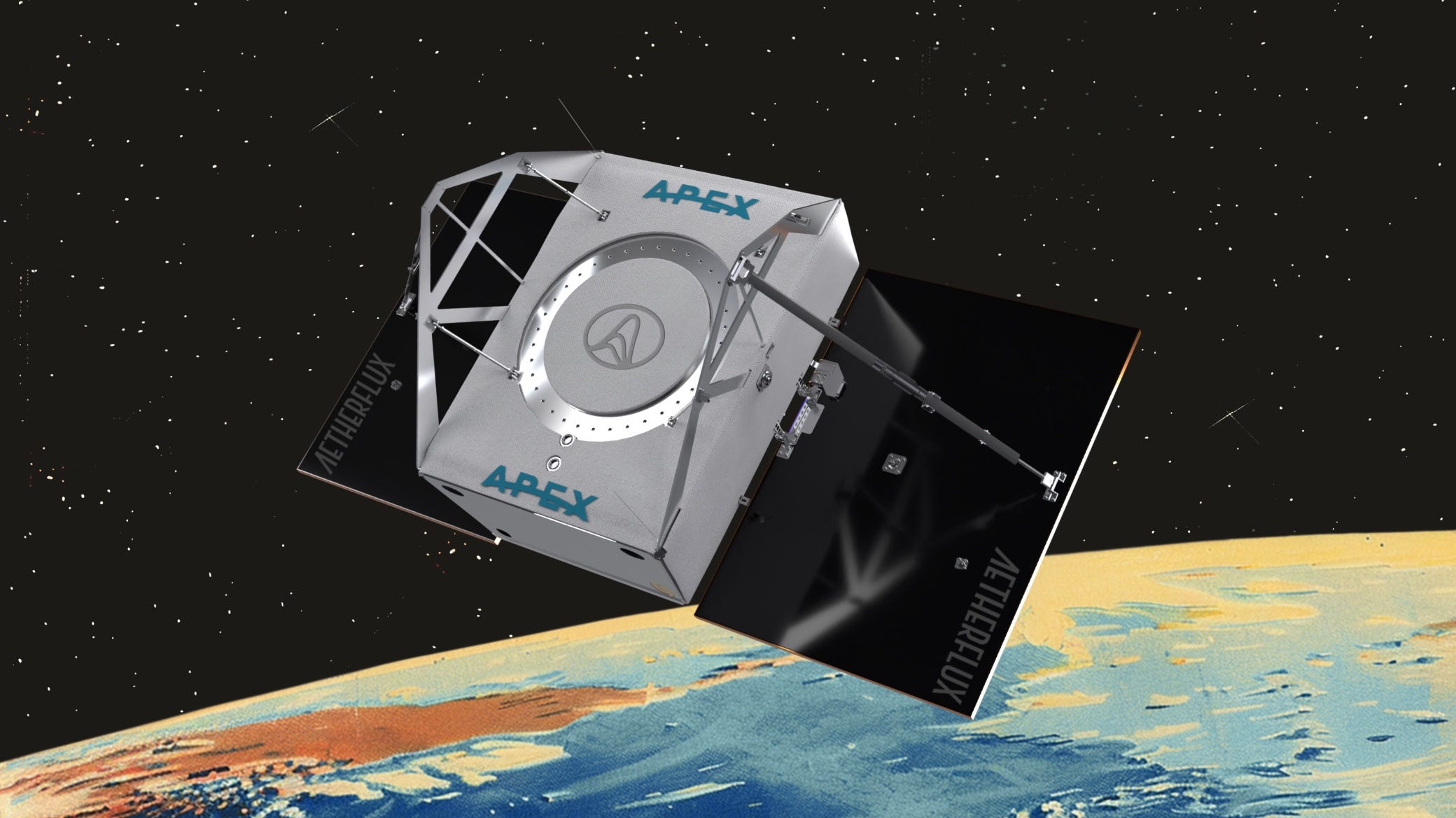
Aetherflux deploys small low-Earth-orbit satellites using infrared lasers for high-power-density delivery to compact ground stations. Applications target remote military operations, disaster relief, and orbital data centers for AI compute. The company plans its first commercial orbital data-center node in early 2027 and has received Department of Defense interest.
Reflect Orbital takes a different path with constellations of orbital mirrors that reflect sunlight directly onto ground solar farms during twilight or night, extending generation hours without conversion losses. Demonstrations are slated for 2026, with ambitions for thousands of satellites.
Virtus Solis emphasizes modularity. Its approach assembles small 1.65-meter tiles robotically in Molniya orbits for long dwell times over target regions. The company targets a 2027 in-orbit assembly demonstration and claims levelized costs competitive with terrestrial sources around 25 USD per megawatt-hour, explicitly planning to leverage Starship for economical component delivery.
Other players include Star Catcher for space-to-space powering of satellites and Volta Space for lunar night operations. Larger firms like Northrop Grumman and Airbus explore military and infrastructure applications, while agencies in China, Japan, and Europe maintain parallel roadmaps. SpaceX functions as a foundational actor through its launch capabilities rather than direct hardware development. Tendencies favor smaller, modular, laser- or mirror-based systems in lower orbits for faster iteration and niche markets before scaling to traditional geostationary microwave architectures.
Current Technologies
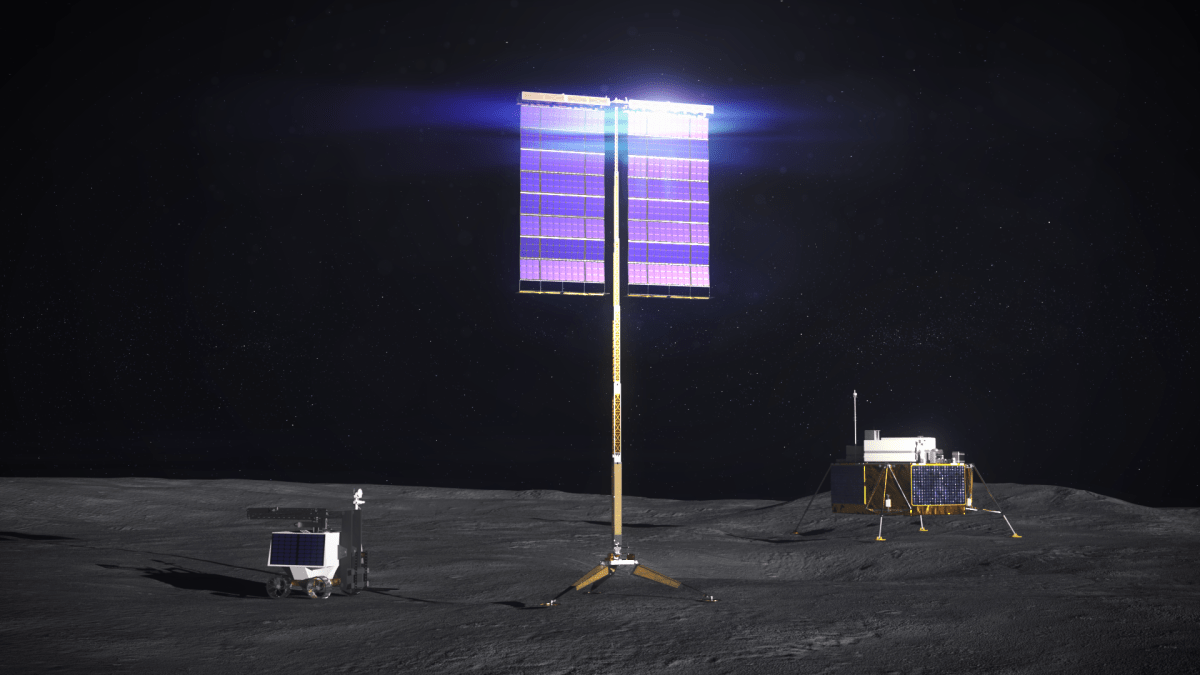
Core elements include high-efficiency photovoltaics, power conversion and conditioning, wireless transmission, and receivers. Modern arrays use lightweight, radiation-tolerant cells, sometimes incorporating self-annealing silicon or tandem structures. Transmission occurs via microwave (weather-penetrating but requiring large rectennas), laser (precise, compact receivers but sensitive to atmosphere), or direct sunlight reflection (zero conversion loss but limited to illuminated periods). In-space assembly relies on robotic arms and modular tiles that deploy from compact launch volumes enabled by Starship-class vehicles. For lunar applications, vertical solar arrays on tall masts maximize low-angle sunlight at the poles, while orbital beaming concepts use in-situ resource utilization to manufacture panels from regolith.
Problems and Challenges
High upfront capital costs remain a barrier despite launch-price reductions. End-to-end efficiency from solar capture to delivered electricity typically falls between 40 and 70 percent depending on technology, creating thermal management and beam-safety issues. Large-scale orbital assembly demands reliable robotics and autonomy in harsh environments. Regulatory hurdles include spectrum allocation for microwaves, international coordination for beam paths, and orbital congestion or debris risks. Safety concerns center on beam intensity and potential effects on aircraft, wildlife, or astronomy (especially for reflective systems). Durability against radiation, micrometeoroids, and thermal cycling adds engineering complexity, while public acceptance of orbital energy infrastructure requires transparent demonstrations of negligible risk.
How Technological and Actor-Driven Changes Drive Progress
Reusable heavy-lift rockets have transformed economics by enabling multiple launches of modular components rather than single monolithic satellites. SpaceX Starship in particular has redefined feasibility through its combination of payload mass and reusability, allowing developers to plan for high-cadence deliveries of tiles, trusses, and transmitters that assemble in orbit. Advances in photovoltaics and metamaterial rectennas have boosted conversion efficiencies and shrunk ground footprints. Robotic in-space assembly and manufacturing technologies, supported by NASA and commercial programs, allow systems to grow incrementally without prohibitive launch mass. Private capital from venture funds and energy majors has accelerated iteration, while government programs de-risk core technologies through demonstrations. Data-center operators and defense agencies provide early revenue streams for niche applications, creating feedback loops that fund further scaling. International competition, particularly from China’s rapid roadmap, spurs faster development across Western players. Lunar programs under Artemis generate demand for surface and orbital power solutions, cross-pollinating technologies with Earth-focused systems.
Outlook
Initial commercial demonstrations are expected between 2026 and 2028, including mirror reflectors, laser prototypes, and modular assembly tests that rely on Starship-class launch capacity. By 2030, targeted projects like Space Solar’s 30-megawatt system or Overview Energy’s data-center supply could deliver the first revenue-generating power. Niche markets—remote power, military operations, orbital compute, and lunar bases—will likely lead adoption, with grid-scale contributions emerging in the 2030s as costs decline further through continued Starship iterations and scale. Lunar applications may mature earlier to support sustained bases, using vertical arrays and orbital beaming. Long-term projections suggest space solar could supply significant portions of global electricity by mid-century if cost trajectories hold, though success depends on sustained investment and regulatory clarity.
Network Analysis of the First Potential Commercial Large-Scale Space Solar Deployment
When the first commercial large-scale system—perhaps a 100-megawatt or greater installation—enters service around 2030 or shortly thereafter, ripple effects will spread across multiple domains. Energy markets receive firm, dispatchable clean power that stabilizes grids and enables deeper penetration of variable renewables. Data centers and energy-intensive industries gain reliable gigawatt-scale supply without geographic constraints, accelerating artificial-intelligence growth and hydrogen production while displacing fossil-fuel generation. This shift lowers overall electricity prices in served regions and improves energy equity for remote or developing communities that previously faced high transmission costs.
The space sector experiences explosive demand for launch services, particularly Starship-class vehicles. High-cadence deployment of modular components and assembly hardware drives manufacturing scale-up at SpaceX and competitors, creating a virtuous cycle: increased flight rates further amortize reusability investments and reduce per-kilogram costs, benefiting all orbital activities from communications constellations to scientific missions. Robotic assembly technologies mature rapidly, paving the way for true in-space manufacturing hubs and on-orbit servicing businesses. Supply chains for specialized photovoltaics, phased arrays, and rectennas expand globally, generating high-skill jobs and spilling innovations back into terrestrial solar and wireless-power applications.
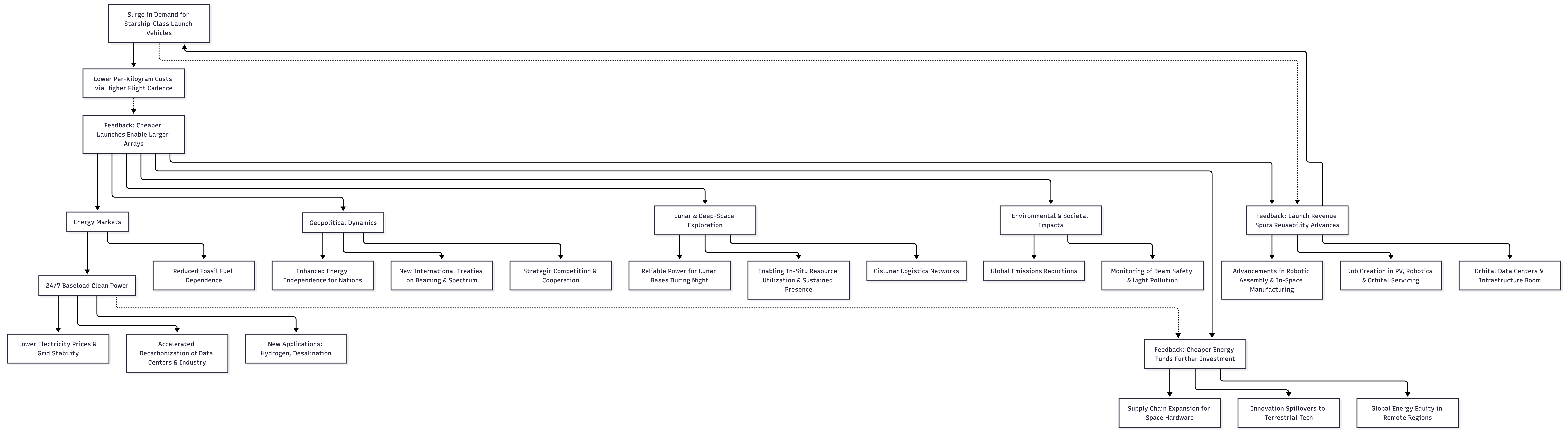
Geopolitically, nations secure greater energy sovereignty, reducing dependence on imported fuels or vulnerable undersea cables and easing resource tensions. New international frameworks emerge to govern beam paths, spectrum usage, and orbital rights, balancing cooperation with strategic competition. On the lunar front, reliable beamed or surface power solves the long-night challenge, enabling permanent bases, in-situ resource utilization for propellants and construction materials, and eventual cislunar logistics networks. Environmentally, net emissions drop substantially through displacement of fossil generation, although localized effects such as beam intensity or reflective light pollution require careful management and new regulatory standards.
Economic multipliers compound these effects. Lower energy costs stimulate industrial activity and innovation spillovers, while the launch boom bolsters the broader New Space economy. Feedback loops reinforce progress: cheaper launches from heightened Starship demand enable larger subsequent solar arrays, successful deployments attract more investment, and proven safety records ease regulatory barriers. Potential edge cases include orbital congestion requiring active debris management or international disputes over beam corridors, yet the overall network points toward self-reinforcing abundance in clean energy and space capabilities.
Conclusion
Commercial space solar power stands at an inflection point. Demonstrations have proven core technologies, startups have identified viable near-term markets, and broader trends in launch economics (anchored by SpaceX Starship) and energy demand have aligned to make orbital energy practical. Initial deployments will likely serve specialized needs before scaling to broader grids and supporting lunar infrastructure. Success will hinge on continued cost reductions, safe and regulated beaming operations, and international coordination. When realized, these systems promise not only abundant clean power but also a transformed space economy and accelerated progress toward sustainable presence beyond Earth. The coming decade will determine whether orbital sunlight becomes a routine part of global and extraterrestrial energy systems.
Sources
Space Solar company website and announcements: https://www.spacesolar.co.uk/
SpaceNews article on Overview Energy Meta deal: https://spacenews.com/overview-energy-to-provide-space-based-solar-power-for-meta-data-centers/
Aetherflux official site: https://www.aetherflux.com/
Caltech Space Solar Power Demonstrator news: https://www.caltech.edu/about/news/in-a-first-caltechs-space-solar-power-demonstrator-wirelessly-transmits-power-in-space
Fortune Business Insights Space-Based Solar Power Market Report: https://www.fortunebusinessinsights.com/space-based-solar-power-market-106363
Mordor Intelligence Space-Based Solar Power Market Analysis: https://www.mordorintelligence.com/industry-reports/space-based-solar-power-market
ESA SOLARIS and related concepts: https://www.esa.int/Enabling_Support/Space_Engineering_Technology/SOLARIS
Astrobotic LunaGrid and VSAT lunar power information: https://www.astrobotic.com/lunar-delivery/lunar-surface-power/
Wikipedia Space-Based Solar Power entry (for historical context): https://en.wikipedia.org/wiki/Space-based_solar_power
Payload Space article on startups racing for space-based power: https://payloadspace.com/four-startups-race-to-make-space-based-power-a-reality/
---
**About the Author**
Jose Luis Chavez Calva is an independent international consultant and economist specialising in energy markets, network theory and innovation. He holds a PhD in Economics from the University of Essex and previously served in Mexico’s Secretariat of Finance and Public Credit (SHCP) and as General Coordinator of the Electricity Market at the Energy Regulatory Commission (CRE). He has been an independent advisor for the last 10 years and has more than 18 years of professional experience. He is a recipient of the 2011 National Public Finance Award.
All original ideas are not mine, but all wrong facts are entirely my own. This article is not investment advise.
Full archive of articles: joseluischavezcalva.substack.com