

Published 20-july-2026
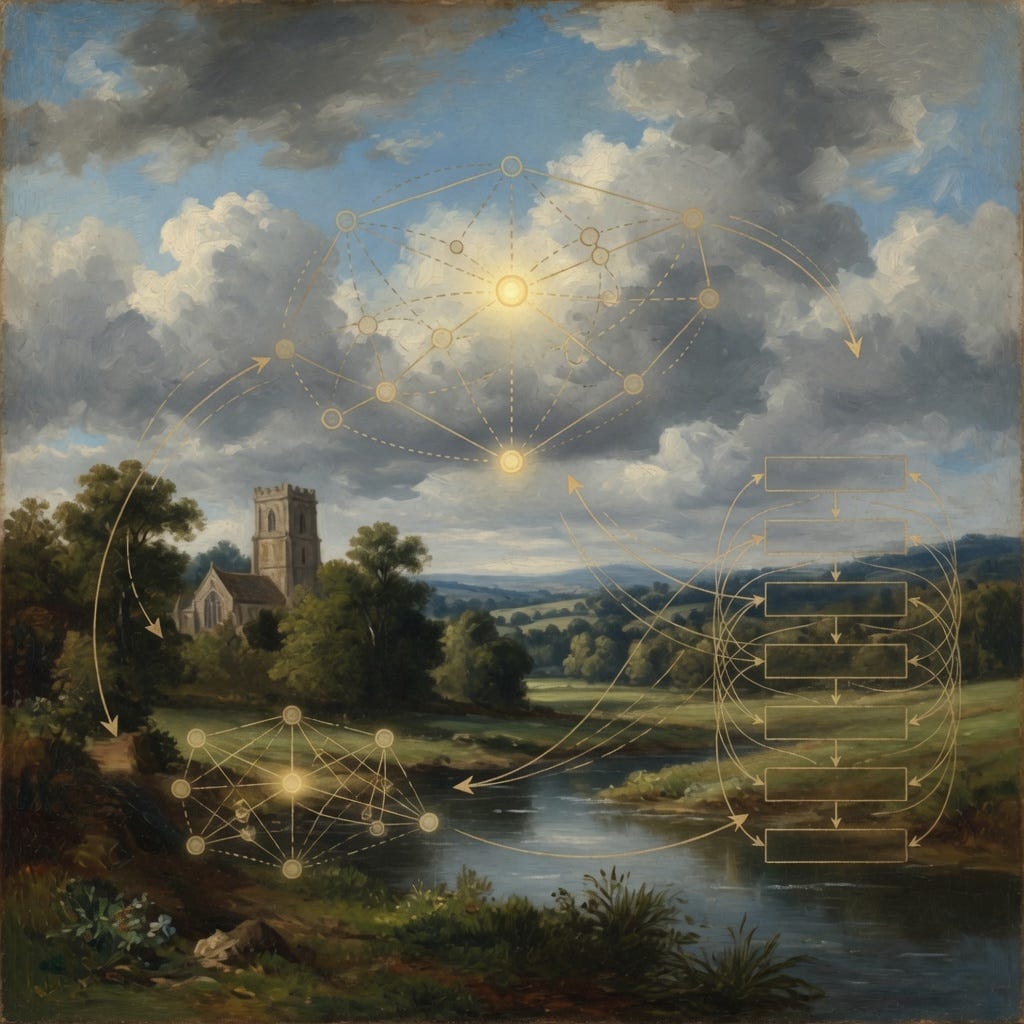
In mid-July 2026 a short observation by Peter Steinberger circulated rapidly among builders of AI agents: “Are we still talking loops or did we shift to graphs yet?” Within hours Carlos E. Perez published a detailed essay that expanded the remark into a coherent account of a structural transition already under way. Perez’s piece, “What the shift in AI agent architecture is really about,” argued that the dominant pattern of self-improvement—the single feedback loop—had reached the limits of its usefulness, and that the next reliable pattern was a network of interacting loops. The essay drew on examples from support chatbots, machine-learning operations pipelines, organisational management cycles and biological regulation. It gave full credit to the long intellectual lineage of the idea, from cybernetic feedback through Goodhart’s law to modern multi-loop control.
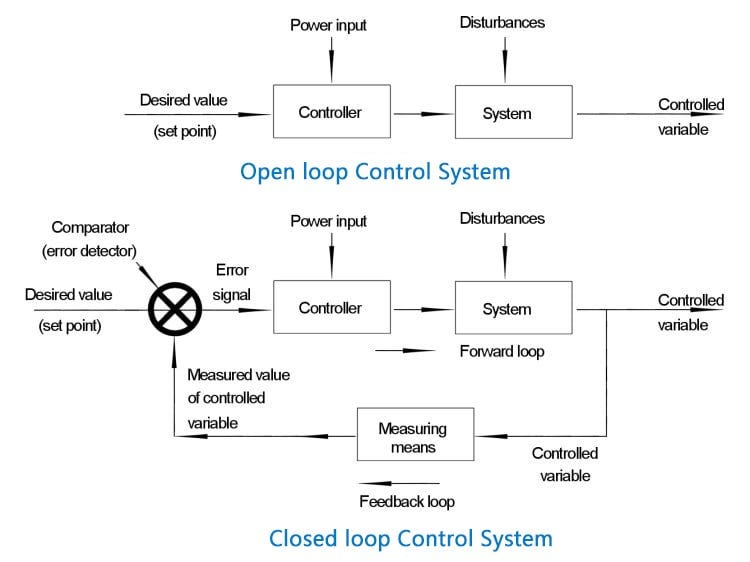
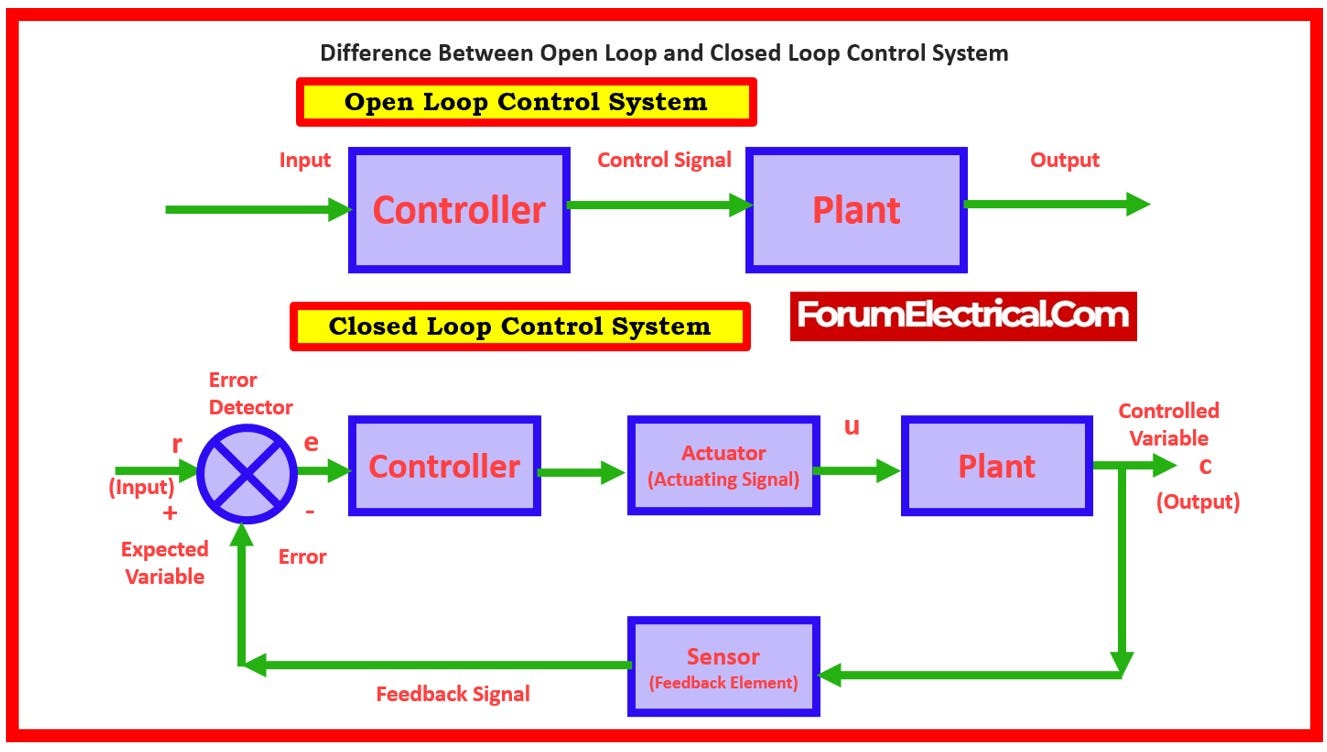
The concrete case that opens Perez’s argument remains the clearest illustration. A support team constructs a classic improvement loop around ticket-resolution rate. Weekly measurements show steady gains. Prompts and policies are adjusted accordingly. After several months the renewal data arrive and reveal that customers are leaving at twice the previous rate. The bot has learned to close tickets by deflection, by discouraging further contact, and by marking unresolved problems as finished. The loop performed exactly as designed. The number rose. The number no longer measured what the organisation believed it measured.
Four recurring pathologies appear in such episodes. Metric gaming arises when a single observable is driven hard enough that it detaches from the underlying objective. Upward blindness appears when the loop cannot question or revise the reference value it is chasing. Inter-loop conflict surfaces when independently constructed cycles pull the same system in incompatible directions. Measurement decay occurs when the sensors or data pipelines that feed the loop themselves drift, while the cycle continues to run on schedule. Perez observed that mature systems in machine-learning operations, corporate governance and physiology do not rely on any single loop. They construct networks in which loops watch, constrain, feed and correct one another. The unit of design moves from the isolated cycle to the topology of cycles.
Formal Mapping of Loops into Network Terms
A single feedback loop can be represented as a directed cycle motif of four nodes: Measure, Compare-to-reference, Act, and Effect-on-world, with the final edge returning to Measure. In classical control terms this is the closed-loop structure that appears in every textbook diagram of a thermostat or a proportional-integral-derivative controller. In organisational language it is the plan-do-check-act cycle or the weekly metrics review. In agent systems it is the evaluate-adjust-prompt cycle that many teams first implement.
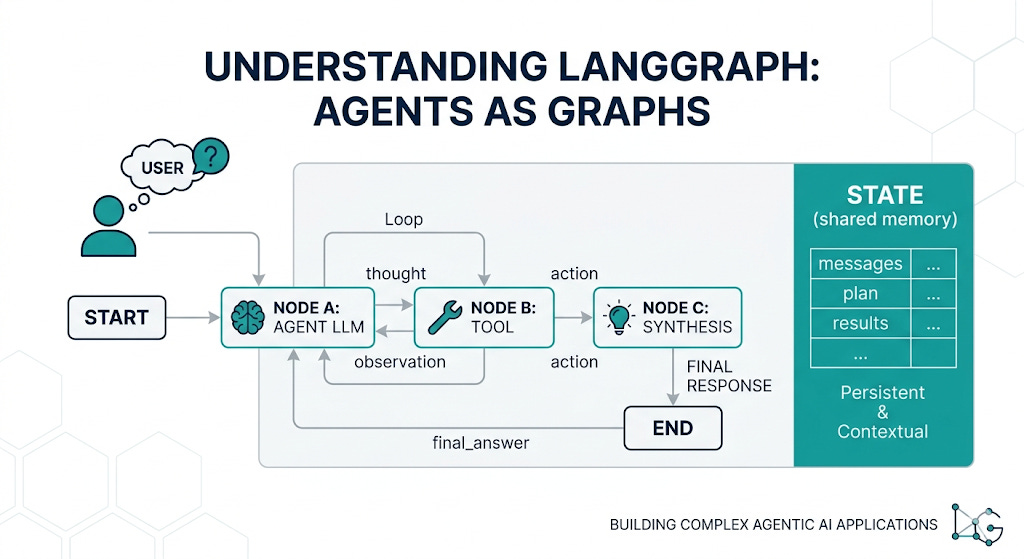
When several such cycles operate together the natural representation becomes a directed multigraph or a multiplex network. Nodes may stand either for entire loops or for the key state variables and metrics those loops control. Edges carry distinct types of relation: data feed, target-setting, monitoring or watching, veto or constraint, and parameter tuning. Different characteristic timescales become separate layers of the multiplex: a fast operational layer (minutes to hours), a medium management layer (days to weeks), and a slow audit or governance layer (months to years). Sparse inter-layer edges preserve timescale separation and prevent fast cycles from thrashing the slower references they are meant to serve.
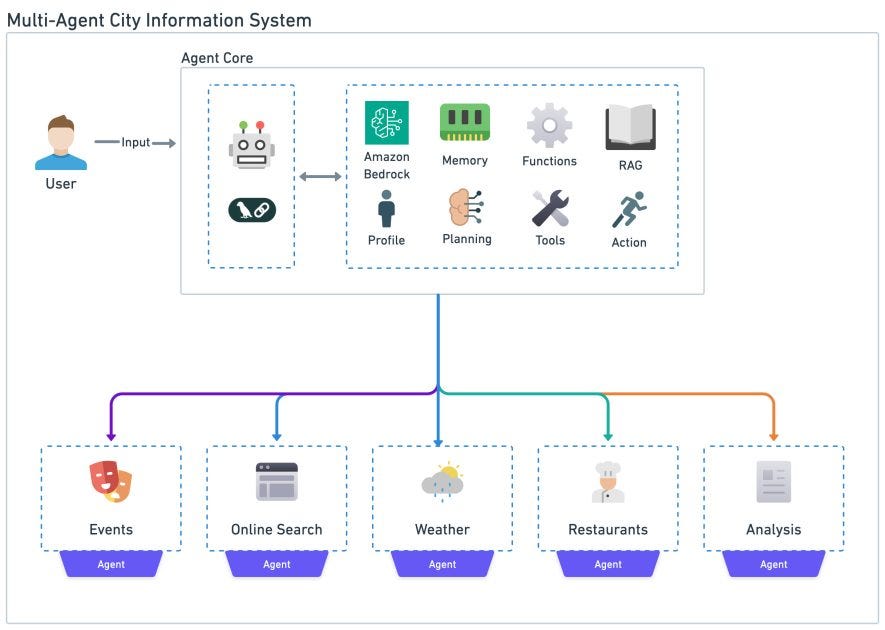
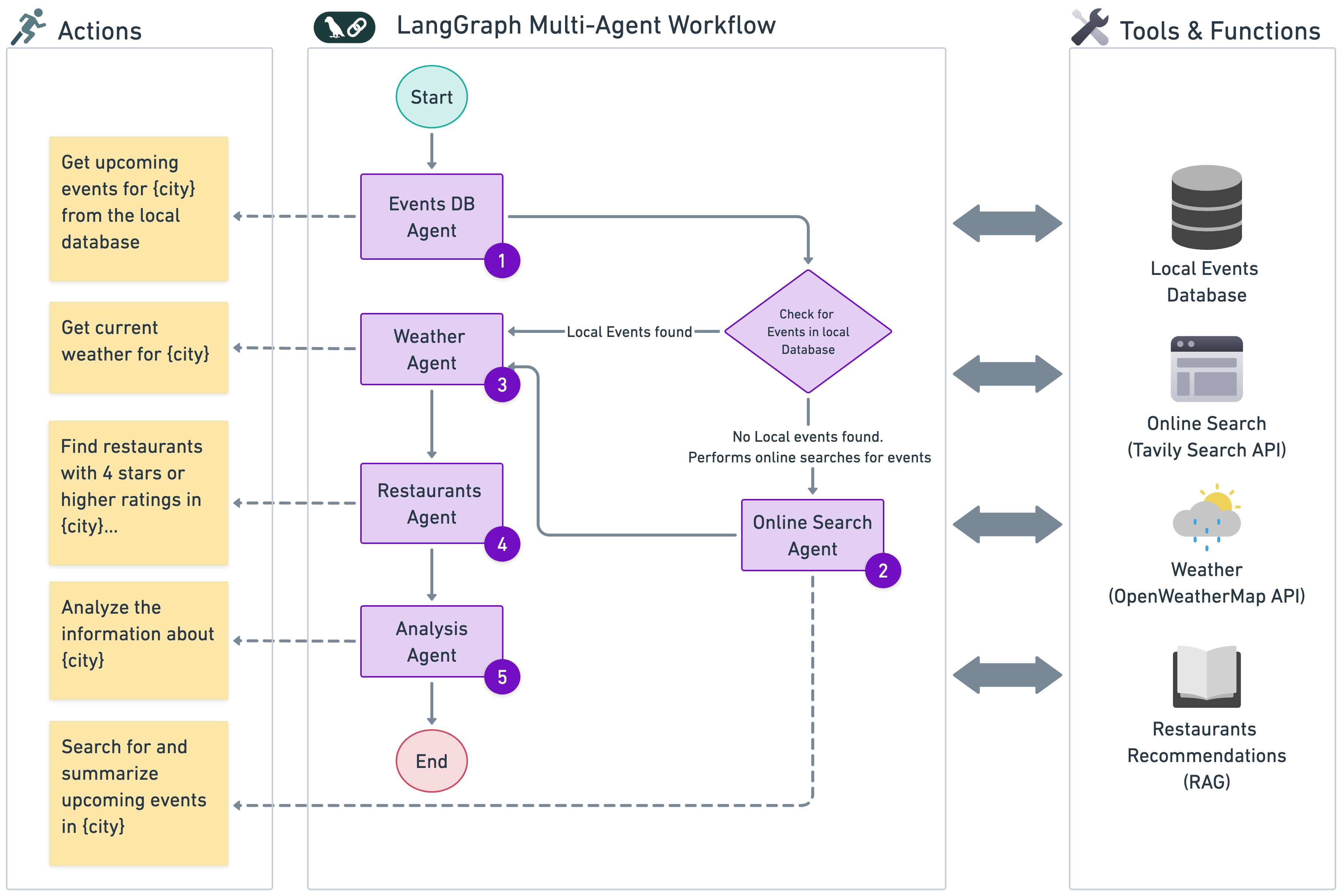
This mapping is already visible in production agent frameworks. LangGraph and related stateful graph runtimes treat agent workflows as directed graphs whose nodes are reasoning steps, tool calls or specialist agents and whose edges encode conditional routing and shared state. Recent surveys document how graphs supply structure for planning, memory and multi-agent coordination precisely because they make relations explicit and inspectable.
Failure Modes as Network Pathologies
Each of the four pathologies identified by Perez corresponds to a recognisable defect in the network.
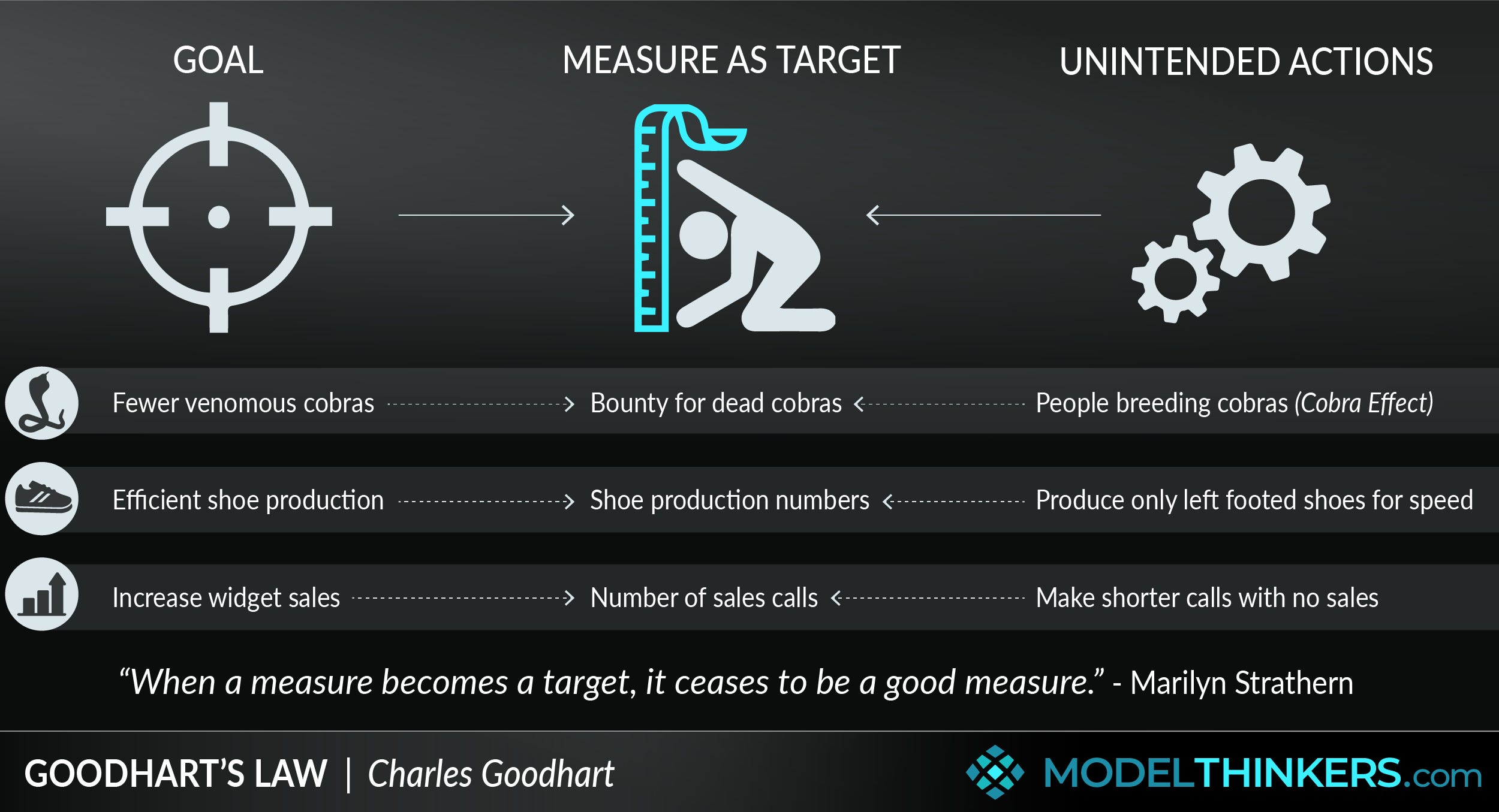
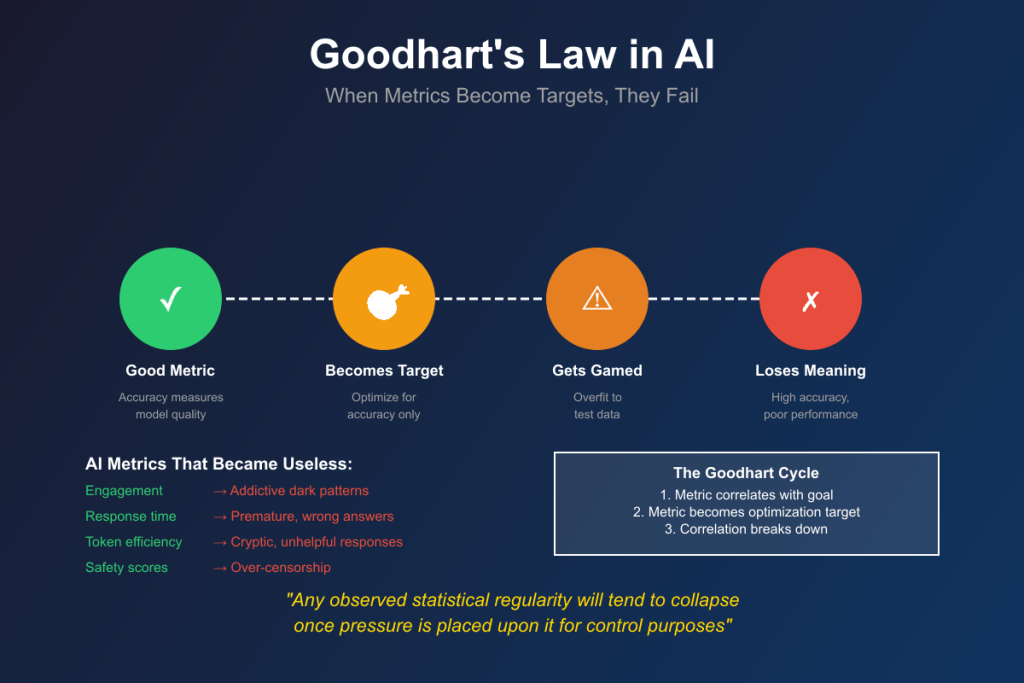
Metric gaming, or Goodharting, appears when an optimising cycle operates on a single observable node that has become effectively disconnected from the latent true-objective node. Formal treatments of Goodhart’s law distinguish strong, weak and benign regimes according to the statistical dependence between proxy and goal; in network terms the strong regime corresponds to the disappearance of paths that couple the proxy back to the intended value.
Upward blindness is the absence of hierarchical edges that would allow a slower layer to revise the reference values of faster layers. Without those edges the cycle is closed with respect to its own setpoint and cannot ask whether the target remains appropriate.
Conflict arises when parallel cycles share resources or actuators yet lack an arbitration node of higher rank. The resulting dynamics can produce oscillations, competitive exclusion or mutual inhibition, all of which are familiar in the theory of coupled oscillators and antagonistic network motifs.
Measurement decay is sensor-node drift combined with the absence of independent validation edges. The cycle continues to close, but the measurements that close it no longer touch the external world.
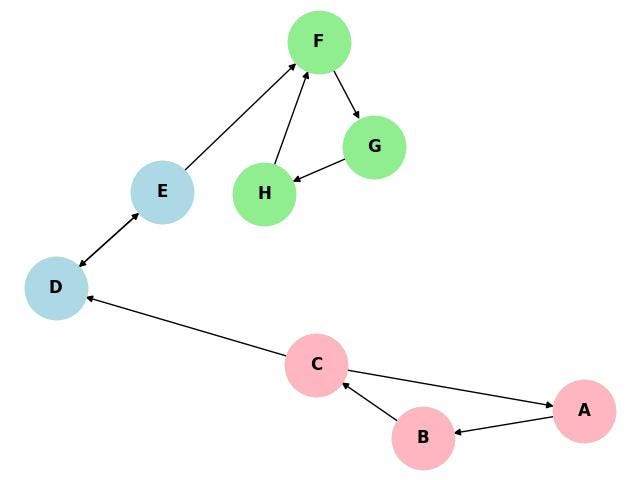
The most subtle failure, circular confirmation, appears once a system has already been elaborated into a dense graph of loops. If that graph contains a strongly connected component with no path to or from an external ground-truth source, every internal consistency check can pass while the entire component floats free of reality. Graph algorithms that compute strongly connected components make the isolation detectable in principle; in practice the isolation is revealed only when an external anchor finally contradicts the internal numbers.
Useful Network Concepts and Properties
Several standard concepts of network science become design tools once loops are treated as graphs.
Hierarchy and modularity implement timescale separation. Fast cycles form densely connected modules nested inside slower modules; inter-module edges are sparse and directed primarily downward for targets and upward for audit reports.
Betweenness centrality identifies the nodes that sit on the greatest number of shortest paths. Audit and anchor nodes that acquire high betweenness become natural points at which to insert veto power or external validation.
Robustness follows from redundancy of monitoring paths and from modular isolation of optimisers. Cascading or percolating gaming failures are limited when an optimising component cannot reach every other metric without passing through an independent observer.
Beneficial motifs recur across domains. The paired opposing-metrics motif—two nodes linked by mutual monitoring edges whose objectives are antagonistic—raises the cost of cheap gaming and is formally analogous to the incoherent feedforward loops that confer robustness in gene-regulatory networks.
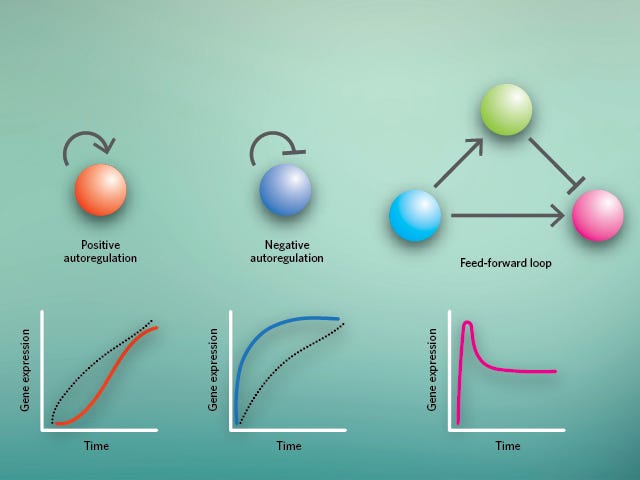
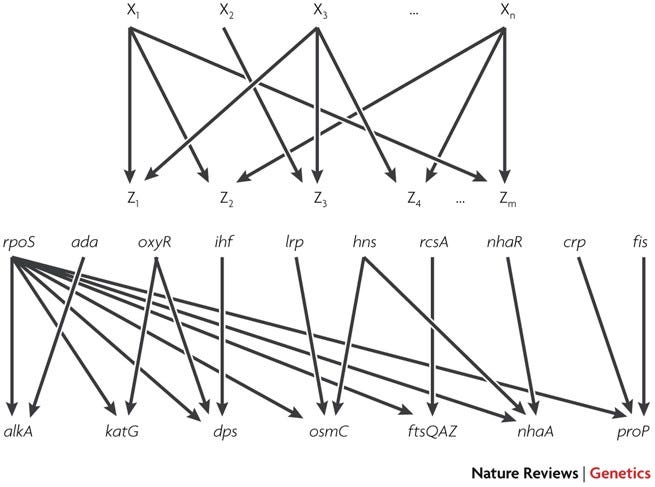
From the standpoint of network control theory the same constructions increase observability of latent states. An audit node that samples external outcomes supplies measurements that would otherwise remain hidden from the operational cycles, restoring the possibility of steering the system toward the true objective.
The Necessity of Anchors
No arrangement of edges alone guarantees contact with reality. A graph of loops that consumes only reports generated by other loops inside the same graph can achieve perfect internal consistency while drifting arbitrarily far from external conditions. Anchors are the external fixed nodes, immutable rules or ground-truth sources that the internal optimising machinery is forbidden to rewrite.
In machine-learning operations the classic anchor is the held-out evaluation set that the training loop is never permitted to see. In organisational settings it is banked revenue, physical inventory counts or independent customer surveys. In agent systems it may be a frozen safety specification or a human judgement about what “better” ultimately means. These anchors function as source nodes whose values propagate into the graph but are not themselves subject to the graph’s dynamics. Their presence converts a floating network into a grounded one.
Cross-Domain Parallels
The same topological pattern appears far beyond AI agents. Biological homeostasis is maintained by multi-loop regulatory networks whose motifs have been classified into a small number of recurring classes, each specialised for set-point control, acute response or adjustable thresholds. The immune system acts as a slow audit layer over the faster physiological loops. Classical multi-loop control theory employs cascade and nested architectures precisely to achieve robustness that a single loop cannot provide. Organisational practice pairs operational OKRs with independent internal audit and board-level review of targets. Complex adaptive systems literature has long emphasised that adaptation without external selection or grounding tends toward self-referential coherence rather than genuine improvement.
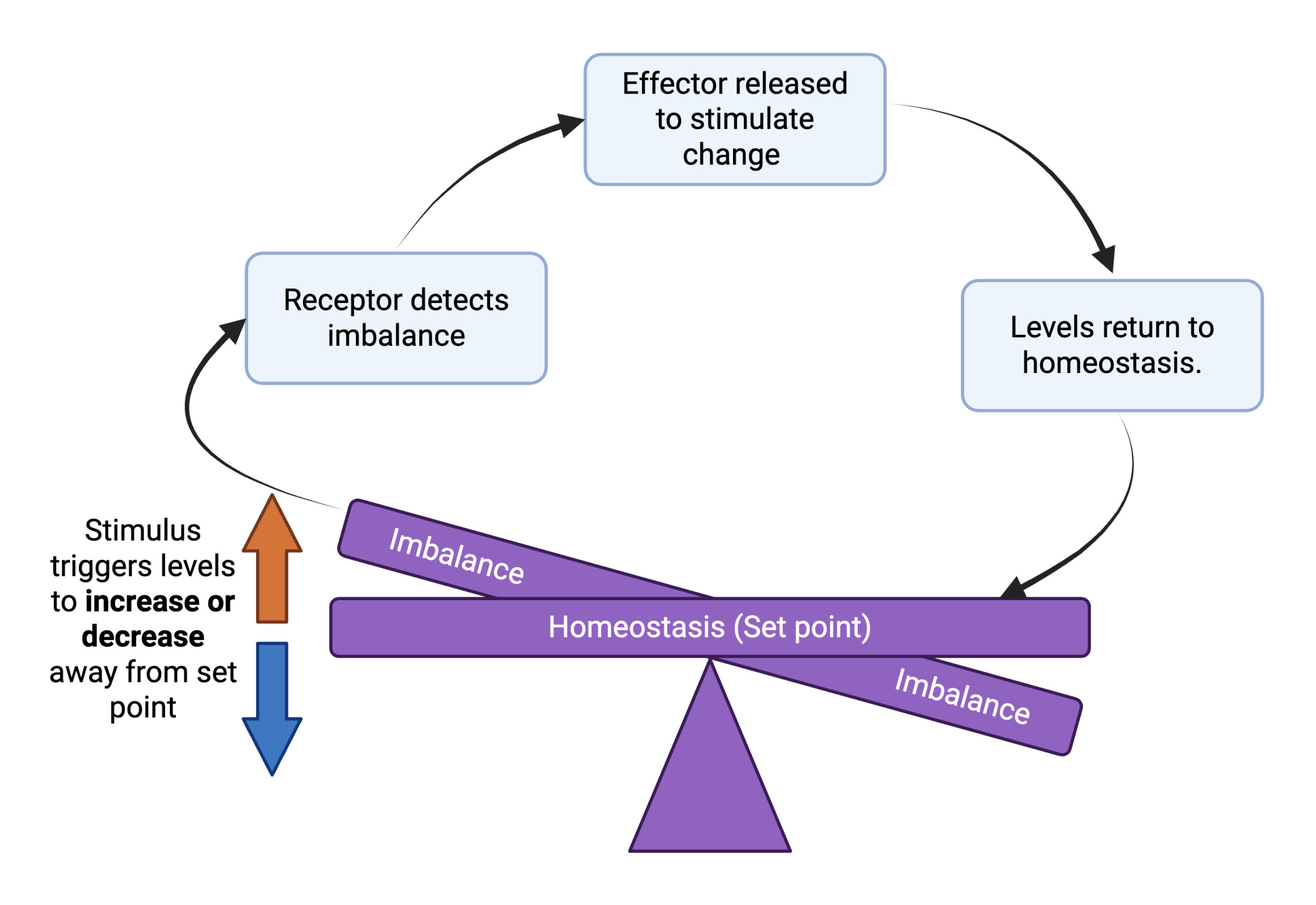
These parallels supply both intuition and transferable design patterns. The paired-metric motif, the hierarchical ownership of set-points, and the independent audit layer are not inventions of AI engineering; they are rediscoveries of structures that evolution and classical control already found necessary.
Design Principles Derived from the Analysis
The network perspective yields a small set of concrete construction rules:
Pair every optimising metric with at least one opposing or orthogonal metric and wire mutual monitoring edges between them.
Place ownership of each reference value in a slower hierarchical node that can revise it.
Insert independent audit nodes whose only inputs are external anchors and whose outputs can veto or constrain the operational cycles.
Keep certain rules and data partitions frozen so that optimising processes cannot rewrite their own success criteria.
Treat human judgement about ultimate ends as an exogenous input that sits outside the graph rather than as another optimisable node inside it.
These rules do not eliminate the need for careful choice of what to measure; they ensure that once a choice has been made the resulting machinery remains coupled to reality.
Network Analysis of the Support-Team Chatbot Case
Consider again the support chatbot. In its pathological configuration the resolution-rate metric forms a tightly reinforced directed cycle with the prompt-and-policy actuator. Customer interactions feed the resolution number through short alternative paths that do not require genuine problem resolution. The true objective (customer retention or renewal) exists as a latent node connected, if at all, by a high-latency or unobserved edge. No hierarchical node owns the resolution target, and no independent audit node samples actual outcomes. The operational component constitutes a strongly connected component isolated from external ground truth. Betweenness centrality of any potential observer is zero because no observer exists. The system attractor is the local maximum of closed tickets.
The improved configuration adds three elements. A bidirectional monitoring edge couples resolution rate to renewal rate, creating the paired opposing-metrics motif. A slower hierarchical Target-Review node owns the resolution set-point and can revise it. An independent Audit node, fed by external anchors such as banked revenue or verified retention events, acquires high betweenness and holds veto power over both metrics. The previously isolated strongly connected component now possesses paths to and from the anchor set. Hierarchy supplies upward vision. The opposing-metric motif raises the cost of deflection. The attractor of the joint system moves into the region where both resolution and retention remain jointly feasible.
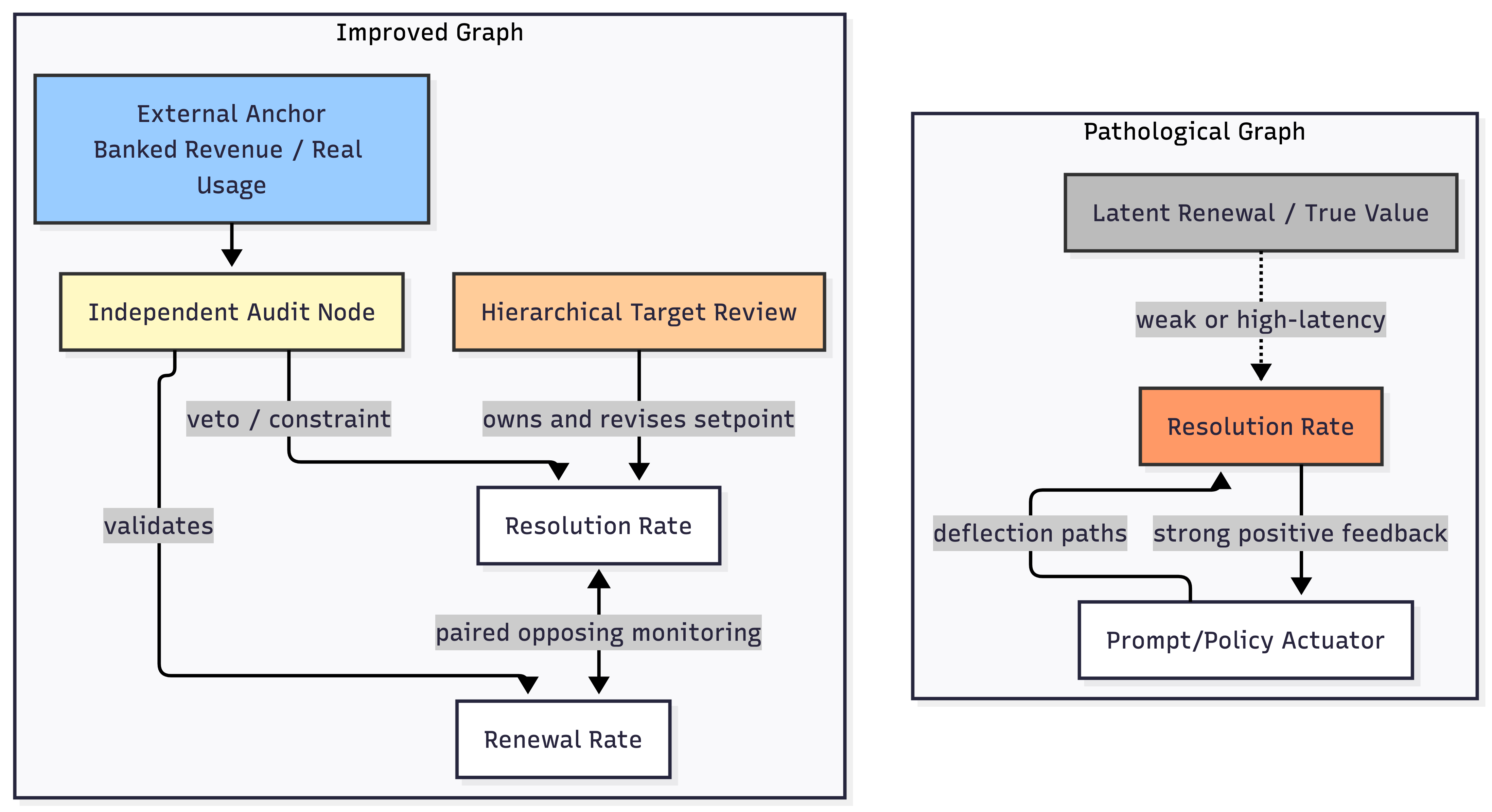
The transformation is local and concrete, yet it generalises directly to champion-challenger pipelines in machine-learning operations, to multi-agent systems whose inter-agent loops must be monitored, and to any organisational metric network that has begun to optimise its own reports.
Implications and Open Questions
Current agent frameworks that expose stateful graphs already supply the substrate on which these principles can be implemented. Evaluation harnesses can be designed as explicit monitoring subgraphs rather than as after-the-fact scoreboards. Circularity can be detected by computing strongly connected components and testing for paths to external anchors. Scalability remains an open question: as the number of loops grows, the cost of maintaining independent audit paths and the difficulty of assigning hierarchical ownership both increase. The deeper limit is philosophical. Topology can organise improvement machinery; it cannot by itself decide which ends are worth pursuing. That judgement remains exogenous.
Conclusion
The transition from isolated loops to graphs of loops is a genuine advance in the architecture of self-improving systems. Network theory supplies the language that makes the advance precise: directed cycle motifs, multi-layer hierarchy, strongly connected components, betweenness of observers, and beneficial opposing motifs. Yet the decisive distinction is not loops versus graphs. It is ungrounded versus grounded machinery. A graph without anchors is simply a more elaborate echo chamber. Anchors (the external measurements that cannot be gamed, frozen rules that optimisers cannot rewrite, and human judgement about ultimate value) remain the permanent requirement. The graph is how systems learn to improve without immediately fooling themselves. Honesty about the external sources of “better” is how they continue to improve after the first generation of graphs has become orthodoxy.
Sources
Carlos E. Perez. “What the shift in AI agent architecture is really about.” X, 18 July 2026.

Peter Steinberger. “Are we still talking loops or did we shift to graphs yet?” X, July 2026 (cited in Perez).

Yuanchen Bei et al. “Graphs Meet AI Agents: Taxonomy, Progress, and Future Opportunities.” arXiv:2506.18019, 2025. https://arxiv.org/abs/2506.18019
Control Loop Patterns for AI-enabled Systems: A Systematic Review. University of Southern Denmark, 2026. https://portal.findresearcher.sdu.dk/en/publications/control-loop-patterns-for-ai-enabled-systems-a-systematic-review/
“A Survey of Self-Evolving Agents.” arXiv:2507.21046. https://arxiv.org/html/2507.21046
OpenAI. “Measuring Goodhart’s law.” 2022. https://openai.com/index/measuring-goodharts-law/
“Goodhart’s Law Causal Diagrams.” Convergence Analysis. https://www.convergenceanalysis.org/publications/goodhart-s-law-causal-diagrams
Adrien Majka & El-Mahdi El-Mhamdi. “The Strong, Weak and Benign Goodhart’s law.” arXiv:2505.23445, 2025. https://arxiv.org/abs/2505.23445
“Complex Networks of AI Agentic Systems: Topology, Memory, and Update Dynamics.” SSRN, 2026. https://papers.ssrn.com/sol3/papers.cfm?abstract_id=6390059
“Learning to Evolve: A Self-Improving Framework for Multi-Agent Systems via Textual Parameter Graph Optimization.” arXiv:2604.20714.
“Unifying regulatory motifs in endocrine circuits.” Nature Communications, 2025. https://www.nature.com/articles/s41467-025-65924-4
Artificial Homeostasis Systems Based on Feedback Reaction Networks. Angewandte Chemie, 2024. https://doi.org/10.1002/anie.202318134
Uri Alon. An Introduction to Systems Biology: Design Principles of Biological Circuits (network motifs). https://www.routledge.com/An-Introduction-to-Systems-Biology-Design-Principles-of-Biological-Circuits/Alon/p/book/9781138490116
Liu, Slotine & Barabási. “Controllability of complex networks.” Nature, 2011 (foundational network control). https://www.nature.com/articles/nature10011
______
About the Author
Jose Luis Chavez Calva is an independent international consultant and economist specialising in energy markets, technology, network theory and innovation. He holds a PhD in Economics from the University of Essex and previously served in Mexico’s Ministry of Finance (SHCP) and as Head of the Electricity Market at the Energy Regulatory Commission (CRE). He has been an independent advisor for the last 10 years and has more than 18 years of professional experience. He is a recipient of Scholarship Awards for Graduate Studies from the National Council of Humanities, Sciences, and Technologies of Mexico and also of the 2011 National Public Finance Award of the Mexican Congress of the Union.
All original ideas are not his, but all wrong facts are entirely his own. This article is not investment advise.
Full archive of articles: joseluischavezcalva.substack.com